How to Get Fast Sinus Pain Relief: 10 Remedies That Can Help

Published August 25, 2026
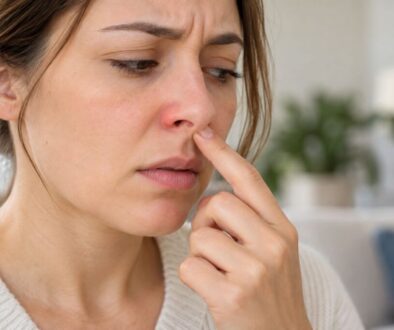
That heavy pressure behind your eyes, tenderness along your cheekbones, and congestion that makes breathing difficult can make sinus pain hard to ignore. Effective sinus pain relief depends on the cause of the symptoms.
Saline sprays, warm compresses, humidified air, and appropriate OTC medications can ease pressure and congestion. The right approach varies by person, and persistent, worsening, or severe symptoms may require medical evaluation.
What Causes Sinus Pain and Pressure?
Common Causes of Sinus Pressure
Sinus pressure can have several causes, including:
- Colds and viral respiratory infections: A common cause of short-term congestion and pressure
- Allergies: Seasonal or year-round allergies can trigger nasal inflammation
- Sinus infections (sinusitis): Most acute cases are viral, although bacterial infections can also occur
- Nasal inflammation and congestion: Irritation can interfere with normal drainage
- Environmental factors: Cigarette smoke, air pollution, and dry air can aggravate nasal tissues
What Does Sinus Pain Usually Feel Like?
Sinus pain often feels like pressure, aching, or tenderness in particular areas of the face:
- Forehead: Often associated with the frontal sinuses
- Cheekbones: Associated with the maxillary sinuses
- Around or behind the eyes: Commonly reported with sinus congestion
- Nose and bridge of the nose: Particularly when the surrounding nasal tissues are inflamed
- Upper teeth or jaw: Pressure in the maxillary sinuses can sometimes be felt in these areas
Facial pain alone doesn’t confirm a sinus problem. Other conditions can produce similar symptoms, so the full pattern of pain, congestion, drainage, and other signs matters.
Sinus Pressure Headache Relief: Is It Really a Sinus Headache?
Signs That Your Headache May Be Sinus-Related
A headache is more likely to have a sinus component when it occurs alongside symptoms such as:
- Facial pressure or tenderness
- Nasal congestion or blockage
- Runny nose or postnasal drip
- Pain around the eyes, cheeks, or forehead
- Symptoms associated with a cold or upper respiratory infection
How Sinus Headaches Differ from Migraines
Migraines can cause facial pressure, nasal congestion, and a runny nose, making them easy to mistake for a sinus headache. Many people who assume their headache is sinus-related may actually have a migraine.
That distinction matters because treatments differ. If headaches are severe, recurrent, or don’t clearly occur with nasal congestion and other sinus symptoms, talk with a healthcare provider instead of assuming a sinus cause.
10 Sinus Pain Relief Remedies That Can Help
1. Use a Saline Nasal Spray
Saline nasal spray is one of the simplest options for sinus discomfort. It moisturizes nasal passages and helps loosen thick mucus, which may reduce the blocked, pressurized feeling from congestion.
Since it contains no decongestant or active medication, saline spray can be a useful first step for managing congestion.
2. Try Saline Nasal Irrigation
Neti pots and sinus-rinse bottles flush mucus, allergens, and irritants from nasal passages. For significant congestion, some find irrigation more useful than a spray.
Critical safety note: Never use plain tap water for sinus irrigation. Utilize distilled or sterile water, or tap water that has been boiled and cooled. Water that is safe to drink can still contain microorganisms that are unsafe when introduced directly into the nasal passages.
3. Apply a Warm Compress to Your Face
A warm, damp cloth over the nose, cheeks, and forehead can provide temporary comfort when your face feels sore or pressured. It won’t address the cause but is a simple option to try alongside other measures, especially if you want relief without medication.
4. Use Humidified Air or Gentle Steam
Dry air can trigger irritation of the nasal passages and aggravate the congestion. A humidifier adds moisture to the air and may make irritated nasal passages more comfortable.
You can also sit in a warm, steamy bathroom for short-term comfort. If using steam from hot water, take care to avoid burns. Very hot steam is not needed to benefit from moist air.

5. Stay Hydrated
Adequate fluid intake can help keep mucus from becoming overly thick, which may make drainage easier during a cold or other respiratory illness.
A practical approach is to drink normally and maintain good hydration rather than forcing excessive water. Hydration supports symptom management but won’t clear a sinus infection alone.
6. Consider an Appropriate Pain Reliever
When facial pain or pressure is significant, an OTC pain reliever may provide more noticeable relief.
Is ibuprofen good for sinus pressure? Yes. Ibuprofen is a nonsteroidal anti-inflammatory drug (NSAID) that reduces pain and inflammation linked to sinus pressure. Acetaminophen is another pain relief option but does not reduce inflammation similarly.
A few considerations:
- Follow dosage instructions on the product label.
- Check combination cold or flu products carefully to avoid taking duplicate active ingredients.
- NSAIDs aren’t appropriate for everyone. If you have certain stomach, kidney, or cardiovascular conditions, or take medications that may interact with NSAIDs, ask a healthcare professional whether ibuprofen is appropriate for you.
7. Consider a Decongestant for Short-Term Congestion Relief
Decongestants reduce swelling in the nasal lining, which can improve airflow and temporarily ease congestion. They’re available as oral medications and nasal sprays.
Nasal decongestant sprays work quickly, but using them longer than directed can cause rebound congestion. Many should be used for up to three days only, so follow the product label.
Oral decongestants have different risks and may not suit people with conditions like high blood pressure or some cardiovascular issues. Check the label or ask a pharmacist before use.
8. Use an Intranasal Corticosteroid When Inflammation or Allergies Are Involved
Intranasal corticosteroid sprays reduce nasal inflammation and can be particularly useful when allergies are contributing to congestion and pressure.
Rather, they function as a long-term addition to your everyday wellness regimen. Their benefit comes from consistent use as directed, making them better for ongoing management of nasal inflammation than immediate relief.
9. Try an Antihistamine When Allergies Are Triggering Your Symptoms
If sinus pressure occurs with allergy symptoms such as sneezing, itchy eyes, runny nose, or postnasal drip, an antihistamine may help address the allergic response contributing to your congestion.
Antihistamines aren’t appropriate for every cause of sinus pain. They make the most sense when allergies are clearly part of the picture.
10. Gently Massage Areas Around the Sinuses
Gentle facial massage won’t cure a sinus infection but may temporarily ease facial pressure.
Using your fingertips, try gentle circular movements over:
- Your forehead, just above the eyebrows
- Your temples
- The bridge of your nose
- Your cheekbones
The goal is comfort, not treatment. Use massage to complement other measures rather than as a standalone solution.
Which Sinus Pain Relief Option Should You Try First?
You don’t need to try all 10 remedies at once. Start with the option that best matches your main symptom.
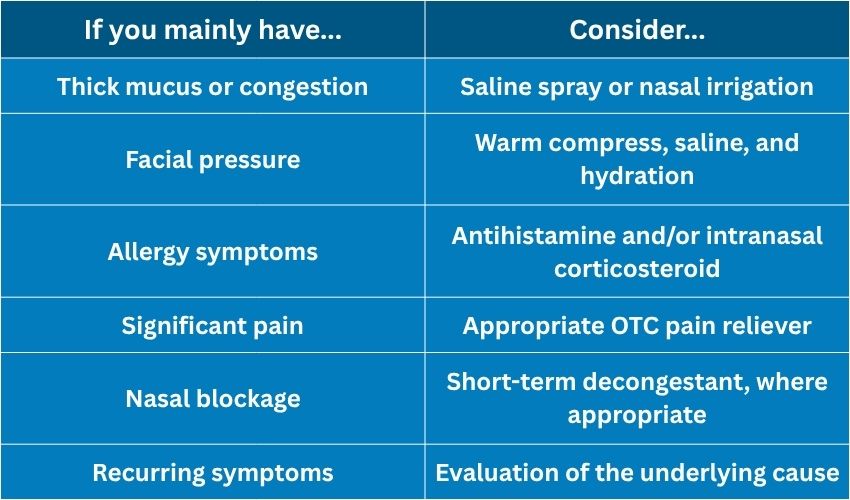
These measures manage symptoms. If sinus problems persist or return repeatedly, identifying the cause is more useful than repeatedly treating each flare-up.
When Should You See a Doctor for Sinus Pain?
When to Seek Medical Advice
Home remedies can be reasonable for mild, short-term sinus discomfort. Professional evaluation is more important when symptoms do not follow that pattern.
Consider reaching out to a doctor for the following:
- Symptoms that last for more than 10 days without improvement
- Increasing facial pain or pressure
- A severe or persistent headache
- Persistent fever alongside sinus symptoms
- Symptoms that improve and then return or worsen
- Sinus symptoms that repeatedly come back
These patterns can occur with conditions requiring more targeted treatment than home remedies provide.
Get Urgent Medical Attention for Concerning Symptoms
Seek timely medical care for symptoms such as:
- A sudden, severe headache unlike previous headaches
- Swelling or redness around the eyes
- Confusion, a stiff neck, or changes in vision
These patterns can occur with conditions requiring more targeted treatment than home remedies provide. If you experience sinus or other ENT symptoms repeatedly, consider longer-term approaches to oral and ENT wellness beyond short-term relief.
Why Choose BioNaze?
The remedies above are focused on managing sinus discomfort in the short term. For people who experience recurring ENT symptoms, there may also be value in thinking about oral and upper-respiratory wellness as part of a broader daily routine.
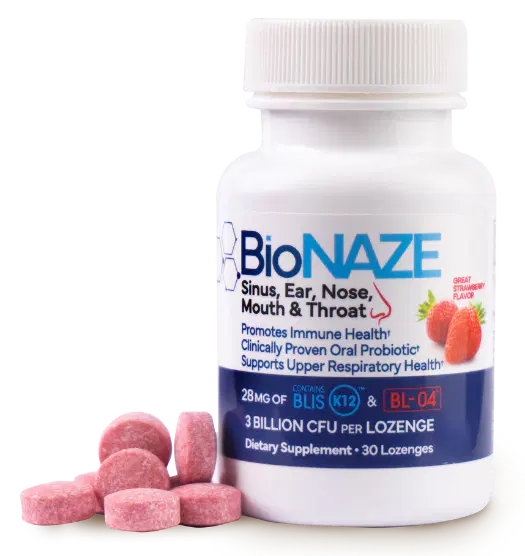
BioNaze is a daily oral probiotic lozenge formulated with BLIS K12™ (Streptococcus salivarius K12) and BL-04™ (Bifidobacterium Lactis BL-04), and positioned to support oral, sinus, and respiratory wellness over time. It isn’t intended to provide immediate relief from acute sinus pain or replace medical treatment.
Individual results vary, and BioNaze is not intended to diagnose, treat, cure, or prevent any disease. For readers interested in longer-term oral and ENT wellness as part of a daily routine, BioNaze offers an option to explore.
Frequently Asked Questions
How can I get sinus pain relief fast?
For short-term relief, try a saline nasal spray, warm compress, or appropriate OTC pain reliever like ibuprofen or acetaminophen. Saline irrigation may help when congestion is significant. There’s no guaranteed instant remedy, and the best option depends on the cause of your symptoms.
Does ibuprofen help with sinus pressure?
Yes. Ibuprofen reduces pain and inflammation linked to sinus pressure. Acetaminophen is another pain relief option but does not reduce inflammation. Follow the product label and check with a healthcare professional if you have a condition or take medication that makes NSAIDs unsuitable.
What is the best way to relieve sinus pressure at home?
For many, a combination of measures works better than relying on one remedy. Saline spray or irrigation helps with mucus and congestion, while hydration and a warm compress improve comfort. An appropriate OTC pain reliever helps when pressure is painful. If allergies drive your symptoms, treating the allergic response may also help.
Can a sinus headache actually be a migraine?
Yes. Migraines can cause nasal congestion, runny nose, and facial pressure, making them easy to mistake for sinus headaches. If headaches are severe, recurrent, or don’t clearly occur with sinus symptoms, discuss them with a healthcare provider instead of assuming your sinuses cause them.
Does a warm compress help sinus pain?
A warm, damp compress can provide temporary comfort around the nose, cheeks, and forehead. It won’t treat an infection or other cause but can be a useful, medication-free addition to saline, hydration, and other symptom-relief measures.
Is a neti pot safe for sinus pressure?
Saline irrigation helps clear mucus and irritants from nasal passages, but safe water is essential. Use distilled, sterile, or previously boiled and cooled water. Never use plain tap water for nasal irrigation.
How long does sinus pressure usually last?
The duration depends on the cause. Pressure from a common cold often improves as the illness resolves, while allergy-related symptoms can continue as long as the trigger remains. Symptoms lasting more than 10 days without improvement or worsening after initial improvement should be evaluated by a healthcare provider.
When is sinus pain a sign I should see a doctor?
Seek medical advice if sinus symptoms persist beyond 10 days, worsen after initially improving, or repeatedly return. Seek urgent medical attention for a sudden severe headache, swelling or redness around the eyes, confusion, or vision changes.

How to Find the Right Sinus Pain Relief for You
Effective sinus pain relief starts by matching the approach to the cause and your main symptoms. For mild, short-term discomfort, simple measures like saline, a warm compress, hydration, or appropriate OTC medication may provide relief.
You don’t need to use every remedy at once. Start with measures that fit your symptoms and seek medical advice if they don’t improve, keep returning, or become severe. Severe or recurring headaches also deserve proper evaluation, particularly when they don’t clearly occur alongside sinus symptoms.
If you’re also interested in supporting oral and ENT wellness as part of a daily routine, BioNaze’s probiotic lozenges provide a complementary option to explore.

This Content Has Been Reviewed For Factual Accuracy
This content has undergone thorough fact-checking by our team of internal experts. Learn more about the meticulous editorial standard for our website here.
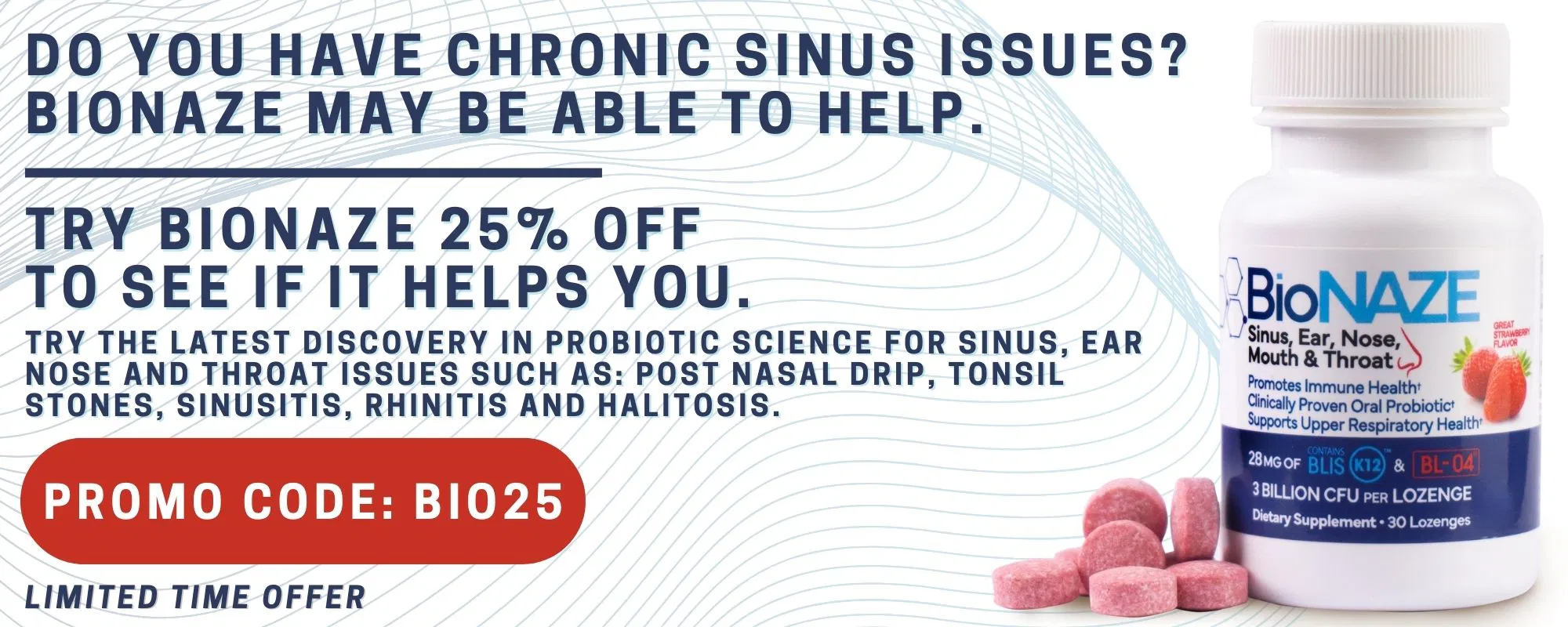
Benefit From The Latest Advancements In Probiotic Science With Bionaze
Bionaze is a proprietary blend of probiotics proven to promote ear, nose, and throat health, improve digestion, and support your immune system. The active ingredients BLIS K12, and BL-04 are considered among the best probiotics according to science.
Get 25% Off Your First Order when you use BIO25 at checkout!
ADVERTISEMENT

About The Author
Hi, I’m Corinne Grace, a proud nursing graduate from Riverside College with a flair for writing. I specialize in health and wellness topics, using my educational background to weave informative and attention-grabbing articles that appeal to a wide variety of readers.