Nasal Vestibulitis Symptoms: 5 Warning Signs & Treatment
Published September 21, 2026
A sore spot inside your nostril can be easy to dismiss, especially when it starts as mild irritation. But if redness, tenderness, crusting, or swelling develops, it may be more than simple nasal dryness. Recognizing nasal vestibulitis symptoms can help you know when irritation may be linked to an infection that needs assessment by a healthcare professional.
Nasal vestibulitis is a bacterial infection affecting the nasal vestibule, the area just within the nostrils. It’s commonly associated with Staphylococcus bacteria and may occur after irritation or minor trauma, such as frequent nose blowing or nose picking. Most cases can be treated, although more extensive infections can affect surrounding tissue.
Here are five signs to watch for, along with how nasal vestibulitis is diagnosed, treated, and managed at home, and when to seek medical attention.
What Is Nasal Vestibulitis?
Nasal vestibulitis is an infection affecting the tissue at the front of the nasal cavity, just inside the nostrils. This area, called the nasal vestibule, contains skin, small hairs, and hair follicles.
The condition is commonly associated with Staphylococcus aureus. These bacteria can be present on the skin or in the nose without causing an infection. Irritation or minor damage to the nasal tissue may contribute to infection.
What Causes Nasal Vestibulitis?
Several everyday habits and situations can irritate the nasal vestibule and may increase the risk of infection, including:
- Picking the nose
- Frequent or forceful nose blowing
- Plucking nasal hairs
- Minor injury or repeated friction
- Nasal piercings
- Ongoing irritation from a persistent runny nose
5 Warning Signs of Nasal Vestibulitis
Nasal vestibulitis can cause local irritation, soreness, and inflammation. One symptom alone doesn’t necessarily indicate the condition, and similar symptoms can occur with other nasal problems.
Redness and Tenderness Inside the Nostril
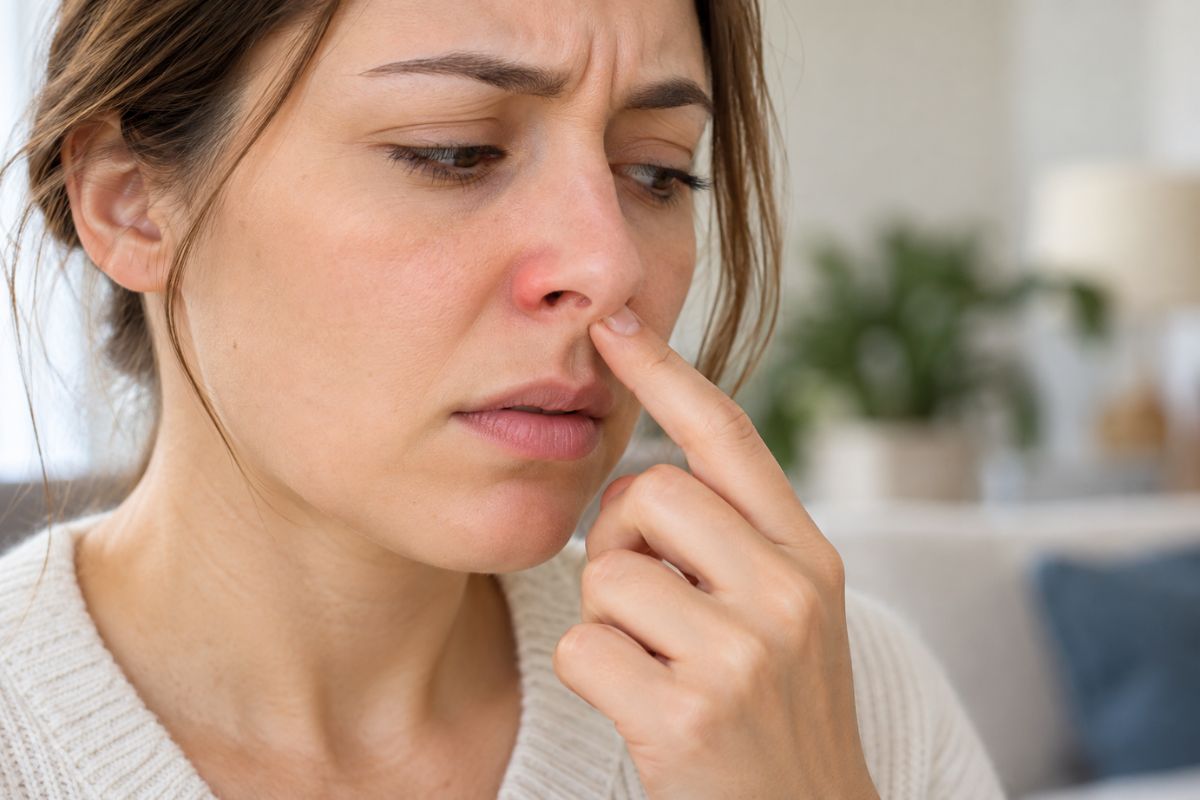
Red, irritated tissue around or just inside the nostril can occur with nasal vestibulitis. The area may feel tender or uncomfortable when you touch your nose, wipe your nostrils, or blow your nose. The discomfort may be localized to one part of the nostril.
A Painful Sore, Bump, or Swollen Area
A small sore, pimple-like bump, or tender area may develop inside the nostril, particularly when a hair follicle is involved.
An infection involving a nasal hair follicle can form a furuncle, commonly called a boil. Furuncles can cause more pronounced pain and swelling and may require different treatment from uncomplicated vestibulitis.
Don’t squeeze or try to drain a painful bump inside your nose. A healthcare professional can determine whether it needs treatment.
Crusting, scabbing, or bleeding
Crusting around the nostril is common in nasal vestibulitis. You may notice dried material around an irritated area, sometimes with bleeding if the crust is disturbed.
Picking at the area can irritate the tissue further and delay healing.
If crusting persists or becomes more extensive, have the area assessed by a healthcare professional.
Swelling or Nasal Congestion
Nasal vestibulitis can cause swelling around the opening of the nostril, which may create a sensation of blockage or fullness.
A blocked or stuffy nose is not specific to nasal vestibulitis. It can occur with allergies, colds, sinus conditions, and other forms of nasal irritation.
Consider this symptom with other changes rather than as a specific sign of infection.
Worsening Pain, Spreading Redness or Fever
Increasing pain, signficiant swelling, redness extending beyond the immediate area, or fever can be signs of a more extensive infection.
These symptoms require medical assessment rather than relying on home care alone. A healthcare professional can decide if treatment, including antibiotics, is needed.
What Does Nasal Vestibulitis Inside the Nose Look and Feel Like?
With nasal vestibulitis inside the nose, you may see redness, inflammation, crusting, scabbing or a small sore near the entrance of the nostril. Some people develop a pimple-like bump, particularly when a hair follicle is involved.
The area may feel:
- Tender when touched
- Sore when wiping or blowing the nose
- Irritated or uncomfortable
- Swollen or full
- More painful if a furuncle or more extensive infection develops
The appearance can vary, and other nasal conditions can cause similar sores or crusting. Appearance alone cannot confirm nasal vestibulitis, so persistent, worsening or recurrent symptoms should be assessed by a healthcare professional.
How Is Nasal Vestibulitis Diagnosed?
Nasal vestibulitis is usually identified through a clinical examination. A healthcare professional will consider your symptoms and examine the inside and outside of your nostrils.
How a Doctor Identifies Nasal Vestibulitis
Your healthcare provider may ask when the symptoms began, whether they’re getting worse and whether you have recently experienced nose irritation, frequent nose blowing, nose picking or other trauma.
They will examine the affected area for redness, swelling, crusting and sores.
Additional evaluation may be considered when symptoms are persistent, recurrent, unusually severe or don’t improve with treatment.
What Other Conditions Can Cause Similar Symptoms?
A sore or irritated area inside the nose can have several possible causes, including:
- Nasal dryness or irritation
- Folliculitis
- A nasal furuncle
- Cold sores
- Other nasal infections or sores
Because these conditions can look similar, persistent or worsening symptoms should be professionally assessed rather than repeatedly self-treated.
Nasal Vestibulitis Treatment: What Helps?
Treatment depends on the suspected cause, severity and extent of the infection.
For bacterial nasal vestibulitis, a healthcare provider may recommend a topical antibiotic such as mupirocin. More extensive infections may require oral antibiotics, depending on the clinical assessment.
A nasal furuncle may need different management from uncomplicated vestibulitis. Larger or persistent boils may require drainage by a healthcare professional.
Don’t use leftover antibiotics or apply an antibiotic product that was not recommended for the affected area.
How Long Does Nasal Vestibulitis Take to Heal?
Recovery time varies depending on the severity of the infection and the treatment provided. Many people begin to feel better within a few days of appropriate treatment, although the timeline can vary.
If symptoms aren’t improving or become worse, contact your healthcare provider rather than continuing self-treatment.

Nasal Vestibulitis Treatment at Home: What Can You Safely Do?
Home care is mainly supportive. It can help avoid further irritation but shouldn’t be considered a substitute for medical treatment when an infection requires professional care.
You can help protect the area by:
- Keeping the nose gently clean
- Avoiding nose picking
- Blowing your nose gently
- Avoiding squeezing or popping sores
- Avoiding unnecessary irritation or trauma
- Following your healthcare provider’s instructions for prescribed medication
A warm, moist compress may be recommended for a nasal furuncle. If you use one, follow your healthcare provider’s instructions and avoid excessive heat. Don’t attempt to drain the area yourself.
If the area becomes increasingly painful, swollen or red, seek professional medical advice.
When Should You See a Doctor for Nasal Vestibulitis Symptoms?
Not every irritated nostril requires urgent care. Certain changes, however, warrant professional evaluation.
Symptoms That Need Prompt Medical Attention
Contact a healthcare professional if you develop:
- Fever or chills
- Increasing or severe pain
- Significant swelling
- Redness spreading beyond the nostril
- A worsening boil or abscess
- Symptoms that don’t improve after treatment
- Repeated episodes of nasal vestibulitis
Although serious complications are uncommon, seek prompt medical attention if swelling or redness spreads across the nose or surrounding facial tissue.
Severe facial swelling, severe headache or vision changes warrant prompt medical attention, particularly when they occur with a suspected or worsening nasal infection.
When to Consider an ENT Evaluation
An ear, nose and throat specialist may be appropriate when symptoms persist, repeatedly return, don’t respond to initial treatment or the diagnosis is unclear. An ENT evaluation may also be appropriate for a persistent nasal lesion or suspected furuncle.
How Can You Prevent Nasal Vestibulitis From Coming Back?
Avoiding repeated irritation may help reduce the risk of another episode.
Avoid picking your nose and blow your nose gently, particularly when you have a cold or allergies. Avoid unnecessary plucking of nasal hairs because it can irritate or injure the surrounding tissue.
If you have a nasal piercing, follow appropriate aftercare and pay attention to persistent redness, swelling or discharge.
If nasal vestibulitis keeps returning, speak with a healthcare professional to identify possible contributing factors rather than repeatedly self-treating.
Why Choose BioNaze?
BioNaze is formulated with two specific probiotic strains: BLIS K12™ (Streptococcus salivarius K12) and BL-04™ (Bifidobacterium Lactis BL-04). These strains have been studied for their potential roles in oral and upper-respiratory health.
As part of a daily wellness routine, BioNaze provides targeted probiotic support for the microbiome. Its formulation is designed to support areas of wellness that are relevant to oral and upper-respiratory health.
BioNaze is not a treatment for nasal vestibulitis or bacterial infections. If you have persistent nasal vestibulitis symptoms, worsening pain, swelling, fever, or other signs of infection, consult a healthcare professional for appropriate evaluation and treatment.
Explore BioNaze to learn more about its probiotic strains and their researched roles in oral and upper-respiratory wellness.
Frequently Asked Questions
Can nasal vestibulitis go away on its own?
Mild nasal irritation may improve without treatment, but suspected nasal vestibulitis shouldn’t be diagnosed based on appearance alone. If symptoms worsen or persist, seek medical advice.
Is nasal vestibulitis contagious?
Nasal vestibulitis itself isn’t generally considered contagious. However, bacteria that can cause the infection, including Staphylococcus species, can spread between people. Good hand hygiene and avoiding shared personal items can help reduce the spread of germs.
Can nasal vestibulitis cause a nosebleed?
Yes. Inflamed or crusted tissue inside the nostril can bleed, particularly when a crust becomes disturbed. Repeated or heavy bleeding should be evaluated, especially if it occurs with worsening pain or swelling.
What causes a painful bump inside the nose?
A painful bump can have several causes, including folliculitis, nasal vestibulitis or a nasal furuncle. A furuncle is an infection involving a hair follicle that can be particularly painful. Avoid squeezing the bump and seek medical advice if it becomes larger, more painful or swollen.
Can I treat nasal vestibulitis at home?
Supportive home care can help protect the affected area, but it may not be enough when nasal vestibulitis requires medical treatment. If symptoms worsen or persist, seek medical advice.
How can I tell if a sore inside my nose is infected?
Increasing redness, tenderness, swelling, crusting, discharge or pain can occur with infection, but these symptoms can also have other causes. A sore that becomes progressively worse or is accompanied by fever should be assessed by a healthcare professional.
Can nasal vestibulitis keep coming back?
It can recur. Repeated irritation and colonisation with Staphylococcus aureus may contribute to recurrent folliculitis or furunculosis. If it keeps returning, discuss it with a healthcare professional to identify possible contributing factors.
Can nasal vestibulitis become a serious infection?
Most cases are treatable, and serious complications are uncommon. However, a more extensive infection can spread into surrounding tissue and cause complications such as cellulitis. Rapidly spreading redness, significant swelling, severe pain or fever warrant prompt medical assessment. Severe headache or vision changes also require urgent evaluation, particularly when they occur with significant facial or nasal swelling.

Key Takeaways About Nasal Vestibulitis Symptoms
Nasal vestibulitis can cause redness, tenderness, sores, crusting, swelling and nasal discomfort, but these symptoms do not confirm a diagnosis because other nasal conditions can cause similar problems.
Avoid further irritation, keep the area gently clean and seek medical advice when symptoms persist, worsen or recur. Home measures may provide supportive care, but suspected bacterial infection may require clinician-directed treatment.
For more information about oral and upper-respiratory wellness, explore the educational resources available at BioNaze. Learn more about its probiotic strains and their researched roles in microbiome and respiratory wellness. BioNaze does not treat nasal vestibulitis, so suspected infection should be evaluated by a healthcare professional.

This Content Has Been Reviewed For Factual Accuracy
This content has undergone thorough fact-checking by our team of internal experts. Learn more about the meticulous editorial standard for our website here.
Benefit From The Latest Advancements In Probiotic Science With Bionaze
Bionaze is a proprietary blend of probiotics proven to promote ear, nose, and throat health, improve digestion, and support your immune system. The active ingredients BLIS K12, and BL-04 are considered among the best probiotics according to science.
Get 25% Off Your First Order when you use BIO25 at checkout!
ADVERTISEMENT

About The Author
Hi, I’m Corinne Grace, a proud nursing graduate from Riverside College with a flair for writing. I specialize in health and wellness topics, using my educational background to weave informative and attention-grabbing articles that appeal to a wide variety of readers.