The Best Probiotics: A Science-Backed Guide to Choosing the Right Strains
Interest in probiotics now extends beyond digestive health, as researchers investigate how specific probiotic strains may support the gut microbiome, oral health, immune function, metabolic health, and the gut-brain axis. Since these benefits are strain-specific, selecting an appropriate probiotic should be based on individual health objectives rather than solely on the product’s colony-forming unit (CFU) count or the number of bacterial strains listed.
Understanding how probiotics work, what to look for when choosing a supplement, and the scientific evidence behind clinically studied strains can help you make more informed decisions about your health. Whether you’re looking to support digestion, maintain oral health, or promote overall wellness, choosing the right probiotic starts with understanding the differences between strains.
What Are Probiotics and How Do They Work?
The human body hosts trillions of microorganisms, including bacteria, fungi, and viruses, which collectively constitute the human microbiome. These microbial communities inhabit various sites such as the digestive tract, oral cavity, skin, and respiratory system, where they contribute to normal physiological functions and overall health.
Probiotics are live microorganisms that can confer health benefits when consumed in sufficient quantities. Instead of solely targeting harmful bacteria, probiotics support microbiome balance by competing with undesirable microbes, producing beneficial metabolites, and interacting with the host’s immune system. Collectively, these mechanisms help sustain a healthy microbial environment throughout the body.
Distinct probiotic strains serve specific functions. Some strains have been primarily investigated for digestive health, while others demonstrate potential in supporting oral wellness, respiratory health, or immune function. Selecting a strain that aligns with defined health objectives is a critical consideration when choosing a probiotic.
When incorporated consistently with a balanced diet and healthy lifestyle, probiotics may support microbiome equilibrium, promote overall wellness, and contribute to long-term health outcomes.

How to Choose the Right Probiotic Supplement
Not all probiotic supplements are created equal. Their effectiveness depends on several factors, including the specific strains used, the number of live microorganisms they contain, product quality, and proper storage.
Understanding these factors can help you select a probiotic that aligns with your health goals and delivers the intended benefits.
Choose the Right Probiotic Strain
The probiotic strain is one of the most important factors to consider. Scientific evidence shows that probiotic benefits are strain-specific, meaning each strain has been studied for different health outcomes.
For example, some Lactobacillus and Bifidobacterium strains have been researched for digestive health, while BLIS K12™ (Streptococcus salivarius K12) has been studied for supporting oral and throat health. Selecting a probiotic formulated with clinically researched strains increases the likelihood that it will address your specific wellness goals.
A greater number of strains doesn’t automatically translate to better results. A probiotic formulated with clinically studied strains is often a better choice than one that simply lists a long blend of bacteria without clear evidence supporting their intended use.
Understanding Colony-Forming Units (CFUs)
Colony-forming units (CFUs) indicate the number of viable microorganisms in each serving of a probiotic.
A high CFU count can be impressive on a product label, but it doesn’t guarantee better results. Effectiveness depends on the probiotic strain, the amount evaluated in clinical studies, and whether enough live microorganisms remain viable until use. Many daily probiotic supplements contain between 1 and 10 billion CFUs, although some specialized formulations contain higher amounts depending on their intended use.
Instead of focusing solely on CFU numbers, consider whether the product contains clinically studied strains in amounts supported by research.
Check the Expiration Date
Because probiotics contain living microorganisms, potency can decrease over time if products are improperly stored.
Always check the expiration date and follow the manufacturer’s storage instructions. Some probiotics require refrigeration, while others are formulated to remain stable at room temperature.
Proper packaging also plays an important role. Protective blister packs, moisture-resistant containers, and opaque bottles help preserve the viability of probiotic strains until the expiration date.
Tips for Choosing the Best Probiotic
With hundreds of probiotic supplements available, choosing the right one can feel overwhelming. Whether you’re looking to support digestive health, oral wellness, or immune function, these practical tips can help you identify a high-quality product.
Read the Label Carefully
Choose products that clearly identify the probiotic strains, not just the species, along with the CFU count, expiration date, recommended serving size, and storage instructions.
Look for formulations backed by clinical research and manufactured according to high-quality standards. Transparent labeling allows you to understand exactly what you’re taking and whether it aligns with your health goals.
Look Beyond Customer Reviews
Customer reviews can highlight practical details such as taste, packaging, or ease of use, but they shouldn’t outweigh clinical evidence.
When evaluating a probiotic, prioritize products supported by published clinical studies and, when possible, independently tested for quality, purity, and label accuracy rather than relying solely on personal testimonials.
Choose a Trusted Brand
The quality of a probiotic often reflects the standards of the company that produces it.
Choose brands that emphasize scientific research, ingredient transparency, and quality manufacturing practices. Companies that invest in clinical research, rigorous quality control, and transparent manufacturing practices are generally more likely to produce reliable probiotic supplements.
Brands specializing in targeted or precision probiotics may also offer formulations designed to support specific areas of health, including digestive, oral, or immune wellness.
Best Probiotic Strains for Digestive Health
Digestive health remains the area where probiotics have the strongest body of clinical evidence. While not every strain produces the same results, several have been studied extensively for supporting digestive balance, maintaining digestive comfort, and promoting normal gastrointestinal function.
The following probiotic strains have been studied for digestive health:
- Bifidobacterium lactis
- Bifidobacterium longum
- Lactobacillus acidophilus
- Limosilactobacillus reuteri (formerly Lactobacillus reuteri)
- Lactiplantibacillus plantarum (formerly Lactobacillus plantarum)
- Lacticaseibacillus rhamnosus (formerly Lactobacillus rhamnosus)
- Bifidobacterium animalis
- Saccharomyces boulardii
- Lacticaseibacillus rhamnosus GG (LGG)
Clinical studies have shown that certain strains may help maintain digestive balance, particularly during or after antibiotic use, while others have been investigated for managing symptoms associated with irritable bowel syndrome (IBS), antibiotic-associated diarrhea, and acute infectious diarrhea.
For example, Lacticaseibacillus rhamnosus GG (LGG) and Saccharomyces boulardii are among the most extensively studied probiotics for reducing the duration of certain diarrheal illnesses when used alongside standard medical care. A 2016 meta-analysis of 12 randomized controlled trials found that LGG cut the risk of antibiotic-associated diarrhea nearly in half compared with placebo, while a separate meta-analysis of five randomized trials found that Saccharomyces boulardii shortened the average duration of acute diarrhea in children by more than a day.
Similarly, Limosilactobacillus reuteri has been studied for supporting digestive comfort in infants and adults, including research involving infant colic, constipation, and Helicobacter pylori management as part of comprehensive treatment strategies. A meta-analysis of six randomized controlled trials covering more than 400 infants found that L. reuteri DSM 17938 meaningfully reduced daily crying time in babies with colic compared with placebo.
Because digestive concerns vary from person to person, selecting a probiotic with strains supported by clinical evidence for your specific needs is often more important than choosing a product with the highest number of bacteria.
Best Probiotic Brands for Digestive Health:


Can Probiotics Support Weight Management?
Although probiotics are not a substitute for a healthy diet and regular physical activity, growing research suggests that certain strains may help support metabolic health and healthy weight management.
Researchers continue to investigate how the gut microbiome influences metabolism, appetite regulation, and body composition. Although the evidence is promising, probiotics should be viewed as a supportive strategy rather than a standalone solution for weight management.
Among the strains studied for metabolic support are:
- Lactobacillus gasseri (now classified as Ligilactobacillus gasseri)
- Lacticaseibacillus rhamnosus
- A combination of Lacticaseibacillus rhamnosus and Bifidobacterium animalis subsp. lactis BB-12
Research involving Lactobacillus gasseri BNR17 has shown potential for supporting healthy body composition and reducing visceral fat in some overweight adults. In one randomized, double-blind, placebo-controlled trial published in the Journal of Medicinal Food, adults who received the higher-dose BNR17 supplement experienced greater reductions in visceral fat and waist circumference than those who received a placebo.
Other studies suggest that certain Lacticaseibacillus rhamnosus strains may influence fat metabolism and body weight, although findings remain inconsistent across populations.
Current evidence indicates that probiotics may offer supportive benefits as part of a broader weight management plan that includes balanced nutrition, regular exercise, adequate sleep, and other healthy lifestyle habits.
Best Probiotic Brand for Weight Loss:
How Probiotics Support Immune Health
Approximately 70% of the body’s immune cells are associated with the gut, highlighting the close relationship between the gut microbiome and immune function. Maintaining a balanced microbiome may help support the body’s natural defenses and healthy immune responses.
Research suggests that certain probiotic strains may help support normal immune function by interacting with immune cells, strengthening the intestinal barrier, and promoting a balanced inflammatory response.
Some of the most studied strains include:
- Lacticaseibacillus rhamnosus GG (LGG)
- Lactobacillus gasseri (now classified as Ligilactobacillus gasseri)
- Bifidobacterium longum
- Lactobacillus crispatus
- Bifidobacterium bifidum
Clinical studies indicate these probiotics may help support immune health and may reduce the frequency or duration of certain upper respiratory illnesses in some populations. A 2026 systematic review and meta-analysis covering randomized controlled trials on probiotics for upper respiratory tract infections identified LGG, Lactobacillus casei Shirota, and Bifidobacterium lactis as the most frequently studied strains, with multi-strain formulations generally showing the most consistent improvements in clinical and immune markers.
However, results vary depending on the probiotic strain, individual health status, and consistency of use.
Probiotics work best as part of a broader approach to immune health that includes balanced nutrition, regular physical activity, quality sleep, and effective stress management.
Best Probiotic Brand for Boosting Immunity:


How Oral Probiotics Support Oral Health
Oral probiotics have become one of the fastest-growing areas of microbiome research. Unlike traditional probiotics that primarily target the digestive tract, these strains are designed to support the natural microbial community in the mouth, where they may contribute to oral and upper respiratory health.
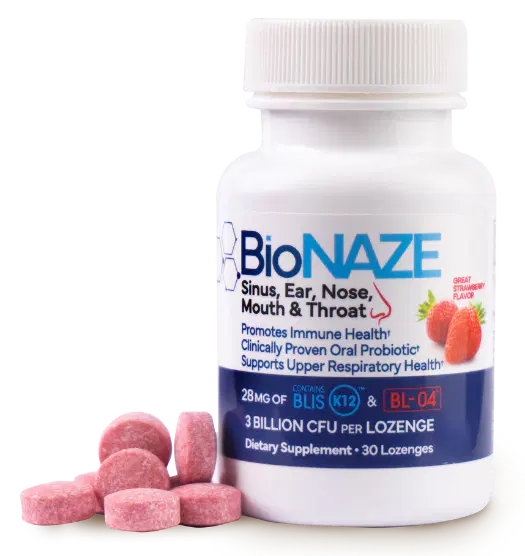
One of the best-studied oral probiotic strains is BLIS K12™ (Streptococcus salivarius K12), a naturally occurring bacterium found in the healthy oral cavity. Clinical studies suggest it may help support a balanced oral microbiome, fresh breath, and throat health when used consistently as part of a daily oral care routine.
Other beneficial bacteria, including certain Bifidobacterium and Lactobacillus species, naturally colonize the mouth early in life and contribute to the development of a healthy oral microbiome.
Studies suggest oral probiotics may support:
- Fresh breath by promoting a balanced oral microbiome
- Healthy gums, when combined with daily brushing and flossing
- A balanced oral biofilm
- Throat and upper respiratory wellness
- Overall oral microbiome health
Unlike traditional digestive probiotics, oral probiotics are commonly delivered as slow-dissolving lozenges, allowing beneficial bacteria to colonize the mouth before being swallowed. This delivery method allows strains such as BLIS K12™ (Streptococcus salivarius K12) to remain in contact with the tissues of the mouth longer, giving them more opportunity to colonize the oral cavity before being swallowed.
A pilot investigation published in Drug, Healthcare and Patient Safety found that daily supplementation with BLIS K12™ was associated with a sustained reduction in recurrent streptococcal pharyngeal disease in children, alongside protective effects against nonstreptococcal infections. A more recent randomized, double-blind, placebo-controlled trial in physically active adults also examined BLIS K12™ supplementation for preventing upper respiratory tract infections over a four-month period.
Research also suggests that BLIS K12™ may help restore microbial balance following the use of antimicrobial mouthwash, making it a useful addition to a comprehensive oral hygiene routine that includes regular brushing, flossing, and professional dental care.
Best Probiotic Brand for Oral Health:
Can Probiotics Support Heart Health?
The influence of the gut microbiome extends beyond digestion. Emerging evidence suggests certain probiotic strains may also support cardiovascular health by influencing cholesterol metabolism, inflammatory pathways, and other metabolic processes linked to heart health.
Several probiotic strains have shown promising results in clinical studies, including:
- Lactobacillus acidophilus
- Bifidobacterium longum
- Limosilactobacillus reuteri (formerly Lactobacillus reuteri)
Some studies suggest these strains may help maintain cholesterol levels already within a healthy range by influencing bile acid metabolism and supporting the body’s natural cholesterol-processing mechanisms. Research has also explored their potential role in supporting healthy triglyceride levels and reducing low-grade inflammation associated with metabolic health.
A randomized, double-blind, placebo-controlled trial in hypercholesterolemic adults found that L. reuteri NCIMB 30242 capsules reduced LDL cholesterol by over 11% and total cholesterol by more than 9% relative to placebo over a 9-week period.
Although these findings are encouraging, probiotics should complement, rather than replace a heart-healthy lifestyle that includes a balanced diet, regular exercise, adequate sleep, and guidance from a healthcare professional.
Best Probiotic Brands for Heart Health:


The Gut-Brain Connection and Probiotics
The gut-brain axis describes the continuous communication between the digestive system, nervous system, and immune system. As researchers learn more about this relationship, current evidence suggests that certain probiotic strains may play a supportive role in mood, stress resilience, and cognitive health.
Some of the most studied strains include:
- Lactiplantibacillus plantarum
- Bifidobacterium infantis
- Bifidobacterium longum
- Lacticaseibacillus helveticus (formerly Lactobacillus helveticus)
Early clinical research suggests these probiotics may help support mood, stress resilience, and cognitive performance in some individuals. A randomized, double-blind, placebo-controlled trial in 116 adults with elevated occupational stress found that an 8-week dual-strain psychobiotic combining Lactiplantibacillus plantarum PS128 and heat-treated Lacticaseibacillus paracasei PS23 produced significantly greater reductions in perceived job stress, state anxiety, and insomnia severity compared with placebo.
Certain probiotic combinations have also shown potential for improving sleep quality and supporting healthy cognitive aging, although larger human studies are still needed.
Brain health is influenced by many factors, including regular physical activity, quality sleep, proper nutrition, stress management, and a healthy microbiome. While research continues to evolve, probiotics may serve as one component of a broader wellness routine.
Best Probiotic Brands for Brain Health:
What Research Says About Probiotics and Autoimmune Conditions
The immune system relies on a healthy balance between activating protective responses and preventing excessive inflammation. Because much of the immune system interacts closely with the gut microbiome, researchers are exploring whether certain probiotic strains may help support immune regulation in people living with autoimmune conditions.
Current research remains in its early stages, but the following probiotic strains have been investigated for their immunomodulatory properties:
- Lacticaseibacillus rhamnosus GG (LGG)
- Lacticaseibacillus casei
- Bifidobacterium bifidum
- Bifidobacterium longum
- BLIS K12™ (Streptococcus salivarius K12)
Preclinical and early clinical studies suggest that some probiotic strains may help regulate inflammatory pathways and support a balanced immune response. For example, preliminary research has explored the role of BLIS K12™ in immune regulation, including studies involving rheumatoid arthritis and psoriasis.
A 24-month case-control longitudinal study of 198 patients with mild to moderate psoriasis found that those treated with Streptococcus salivarius K12 for 90 days showed a significantly greater improvement in PASI severity scores than the untreated control group, with benefits that continued to build over longer use.
While these early findings are encouraging, more large-scale human clinical trials are needed before probiotics can be recommended for managing autoimmune diseases.
Individuals with autoimmune conditions should always consult a healthcare professional before beginning probiotic supplementation, particularly if they are receiving immunosuppressive therapies.
Natural Food Sources of Probiotics
While probiotic supplements provide targeted strains in measured amounts, many fermented foods naturally contain beneficial microorganisms that can help support microbial diversity as part of a balanced diet.
Incorporating a variety of fermented foods into your meals may contribute to a healthy gut microbiome while also providing valuable vitamins, minerals, and other nutrients.
Examples include:
- Yogurt with live and active cultures
- Kefir
- Sauerkraut
- Kimchi
- Miso
- Tempeh
- Natto
- Kombucha
- Certain aged cheeses with live cultures
- Traditional cultured buttermilk
- Naturally fermented pickles
Because the types and amounts of beneficial bacteria vary between foods, fermented foods should complement, rather than replace, clinically formulated probiotic supplements when you’re seeking specific strain-related health benefits.
How to Get the Most from Your Probiotic
Adding probiotics to your daily routine may help support digestive, oral, and overall microbiome health when paired with healthy lifestyle habits. Choosing the right product and taking it consistently are equally important for achieving the intended benefits.
These practical strategies can help maximize the benefits of your probiotic.
Match the Strain to Your Health Goals
Because probiotic benefits are strain-specific, selecting the right strain is one of the most important decisions when choosing a supplement.
For example, digestive probiotics are typically formulated with strains studied for gastrointestinal health, while oral probiotics contain strains selected for supporting the oral microbiome and upper respiratory wellness.
Rather than choosing a supplement based solely on the number of strains or CFUs, look for products containing evidence-backed strains that match your specific health goals.
Choose the Right Delivery Method
The delivery method plays an important role in probiotic effectiveness.
Digestive probiotics often use delayed-release capsules or protective technologies that help beneficial bacteria survive stomach acid and reach the intestines.
Oral probiotics are formulated differently because they are designed to act in the mouth rather than the digestive tract. Slow-dissolving lozenges allow beneficial bacteria time to colonize the oral cavity before being swallowed. This delivery method is particularly important for strains such as BLIS K12™, which are designed to support the oral microbiome and throat health.
Always follow the manufacturer’s instructions regarding storage and recommended use to help maintain probiotic viability.
Take Probiotics Consistently
Consistency is essential because probiotics work by helping maintain a balanced microbiome over time.
Daily supplementation, combined with good nutrition, regular physical activity, proper oral hygiene, and other healthy lifestyle habits, may help support the long-term balance of beneficial microorganisms throughout the body.
Like many wellness habits, probiotics are generally most effective when taken consistently rather than occasionally.
Unlock Your Health Potential With Probiotics
Probiotics may support far more than digestive health, but their benefits depend on choosing strains backed by clinical research for your specific wellness goals.
Whether you’re looking to maintain digestive balance, support your oral microbiome, or complement a healthy lifestyle, selecting an evidence-based probiotic can help you make more informed decisions about your long-term health.
Combined with healthy lifestyle habits, the right probiotic may be a valuable addition to your long-term wellness routine.

About The Author
Hi, I’m Corinne Grace, a proud nursing graduate from Riverside College with a flair for writing. I specialize in health and wellness topics, using my educational background to weave informative and attention-grabbing articles that appeal to a wide variety of readers.