Bad Smell in the Nose? Causes, Treatments & When to Worry

Published September 7, 2026
A bad smell in your nose can be unpleasant and sometimes difficult to explain. You may notice a foul, rotten, metallic, chemical, smoky, or unusual odor that seems to come from inside your nose. Common causes include sinus and nasal problems, mucus buildup, oral health issues, dryness, and changes in your sense of smell.
The smell itself usually cannot identify the exact cause. Symptoms that occur with it, how long it has lasted, and whether others can detect the odor provide important clues. Knowing these differences can help determine if the problem is temporary or needs professional evaluation.
Why Do I Have a Bad Smell in My Nose?
A bad smell in the nose can have several possible causes. Common causes involve the nasal passages or sinuses, mucus buildup, oral health, dryness, or changes in smell perception.
Possible causes include:
- Sinus infection or sinus inflammation
- Postnasal drip or mucus buildup
- Nasal congestion or obstruction
- Nasal polyps
- Dry nose or dry mouth
- Dental or oral problems
- Certain foods, medications, or environmental exposures
- Phantosma, which is smelling an odor that’s not actually present
- Less common system or neurological conditions
The most useful clues are the symptoms with the odor, how long it has lasted, and whether the smell is present or only perceived. The sections below explain each possible cause and when it may require professional evaluation.
Smell Types and What They May Mean
People describe unusual nasal odors in various ways, including foul, rotten, musty, metallic, chemical, smoky, burning, sweet, or fruity smells. These descriptions may provide clues, but the smell alone cannot reliably diagnose a condition.
Pay attention to the odor together with other symptoms, such as congestion, nasal drainage, facial pressure, bad breath, changes in your sense of smell, or an odor that nobody else can detect.
Rotten or Foul Smell
A rotten or foul smell may occur when mucus or other material accumulates in the nasal passages or sinuses. Sinus problems, nasal obstruction, or an oral source can also contribute to an unpleasant odor.
Symptoms that may occur with it include:
- Nasal congestion
- Thick or unusual nasal drainage
- Postnasal drip
- Facial pressure
- Bad breath
- Reduced or altered sense of smell
Musty or Stale Smell
A musty or stale odor may occur with mucus buildup, congestion, dryness, or changes in smell perception.
Look for clues such as:
- A blocked nose
- Mucus in the throat
- Dry nasal passages
- Reduced ability to smell normally
If the smell persists without an obvious cause, it’s worth discussing with a healthcare professional.
Metallic Smell
A metallic smell can occur with changes in smell perception. Nasal irritation or bleeding can also affect how odors are perceived.
If you repeatedly notice a metallic smell without an identifiable source, especially if other symptoms occur, consider seeking medical advice.
Chemical, Smoky, or Burning Smell
Some people experience chemical, smoky, or burning odors as a form of altered smell perception. Phantosmia, for example, causes a person to perceive a smell that’s not actually present. Common descriptions include burning, chemicals, smoke, garbage, or rotting odors.
If you repeatedly smell smoke, burning, or chemicals when other people cannot detect them, the symptom should be evaluated if it persists.
Sweet or Fruity Smell
A sweet or fruity odor can have several possible explanations. The smell by itself is not enough to determine the cause.
If an unusual sweet or fruity smell is persistent or occurs with other unexplained symptoms, discuss it with a healthcare professional rather than trying to diagnose the cause from the odor alone.

All Possible Causes of a Bad Smell in the Nose
Sinus Infection or Sinusitis
Sinusitis occurs when the tissues lining the sinuses become inflamed, which can interfere with normal mucus drainage. It can be associated with congestion, mucus buildup, postnasal drip, changes in smell, and bad breath.
Symptoms that may suggest a sinus problem include:
- Stuffy or blocked nose
- Thick nasal mucus
- Postnasal drip
- Facial pressure or pain
- Headache
- Reduced or changed sense of smell
- Cough
- Bad breath
- Fever in some cases
What to do: If the odor occurs with persistent congestion, facial pain, unusual drainage, or other sinus symptoms, consider having the underlying problem evaluated.
A bad smell alone does not mean you have a sinus infection. Most sinus infections are caused by viruses and improve without antibiotics.
Postnasal Drip and Mucus Buildup
Postnasal drip occurs when mucus drains from the nasal passages toward the throat. Nasal inflammation, allergies, colds, and sinus problems can affect normal mucus drainage.
Symptoms may include:
- Feeling mucus in the throat
- Frequent throat clearing
- Nasal congestion
- Cough
- Unpleasant taste
- Bad breath
What to do: Managing the underlying nasal congestion or inflammation may help. Saline nasal care can also help clear mucus when used appropriately.
Nasal Congestion or Obstruction
A blocked nasal passage can interfere with normal airflow and mucus drainage. Congestion can also affect your sense of smell.
Symptoms may include:
- Difficulty breathing through the nose
- One-sided or persistent blockage
- Nasal drainage
- Reduced sense of smell
- Postnasal drip
What to do: If congestion is persistent or occurs mainly on one side, professional evaluation can help determine the underlying cause.
Nasal Polyps
Nasal polyps are soft growths that can develop in the lining of the nose or sinuses. Larger or multiple polyps can obstruct the nasal passages and are associated with congestion, postnasal drip, and reduced smell.
Symptoms may include:
- Persistent stuffy nose
- Difficulty breathing through the nose
- Postnasal drip
- Reduced or absent sense of smell
- Reduced sense of taste
- Facial pressure or headache
What to do: Persistent symptoms should be evaluated by a healthcare professional, particularly when nasal blockage or loss of smell does not improve.
Dry Nose or Dry Mouth
Dryness can affect the normal function of the nose and mouth. Dry mouth can also contribute to unpleasant breath or an altered taste.
Possible symptoms include:
- Dry or irritated nasal passages
- Dry mouth
- Thirst
- Mouth breathing
- Unpleasant breath
- Thick or sticky saliva
What to do: Staying hydrated and addressing environmental dryness may help with mild symptoms. Persistent dryness may require evaluation for an underlying cause or medication effect.
Dental and Oral Causes
An unpleasant odor perceived around the nose does not always originate in the nasal passages. Dental problems, gum disease, poor oral hygiene, and dry mouth can contribute to persistent bad breath.
Clues that an oral source may be involved include:
- Persistent bad breath
- Gum bleeding or irritation
- Tooth pain
- Dry mouth
- Unpleasant taste
- Recent dental problems
What to do: Maintain good oral hygiene and seek dental evaluation when oral symptoms are present.
Foods, Medications, and Environmental Factors
Certain foods, medications, smoking, and environmental exposures can affect breath or smell perception.
Clues include:
- The odor begins after a specific exposure
- Symptoms change after the suspected trigger is removed
- There are no persistent nasal or oral symptoms
What to do: If the odor continues or repeatedly returns after the suspected trigger is gone, consider discussing other possible causes with a healthcare professional rather than assuming it’s related to the exposure.
Phantosmia
Phantosmia is the perception of a smell that’s not actually present in the environment. Instead of detecting an odor from an external source, a person may perceive smells such as smoke, burning, chemicals, something rotten, or another unusual odor.
Symptoms may include:
- Smelling smoke when there’s no smoke
- Smelling something rotten or foul without an identifiable source
- Chemical or burning odors
- An odor that other people cannot detect
- Repeated or persistent phantom smells
Phantosmia can have several possible causes, including upper respiratory or sinus problems, head injury, migraines, dental problems, certain medications, and other conditions that affect the sense of smell. Less commonly, smell disturbances may be associated with neurological conditions.
What to do: If phantom smells persist, repeatedly return without an identifiable source, or occur with other unexplained symptoms, speak with a healthcare professional so the underlying cause can be evaluated.
Rare Systemic and Neurological Causes
Most people with a bad smell in the nose do not have a serious systemic or neurological disease. Rare conditions can affect body odor, breath odor, or the way smells are perceived, but these are not the first explanations to assume.
Certain metabolic or systemic disorders and neurological conditions can affect smell perception. Kidney disease, for example, should not be assumed simply because you notice a bad smell in your nose. Likewise, a persistent phantom smell does not automatically mean that a neurological disorder is present.
What to do: Persistent, unexplained, or unusual symptoms should be evaluated by a healthcare professional rather than self-diagnosed based on the smell alone.
Symptoms That Can Occur With a Bad Smell in the Nose
The symptoms that accompany the odor can provide important context alongside the smell itself.
Depending on the underlying cause, you may experience:
- Nasal congestion or blockage
- Runny nose
- Thick or discolored mucus
- Postnasal drip
- Facial pressure or pain
- Headache
- Reduced or altered sense of smell
- Bad breath
- Unpleasant taste
- Dry nose or mouth
- Cough
- Fever
- Tooth pain
- Gum irritation or bleeding
- Persistent phantom smells
For example, congestion, facial pressure, postnasal drip, and changed smell may occur with a sinus or nasal problem, while tooth pain, gum symptoms, or persistent bad breath may suggest an oral source.
Pay attention to which symptoms occur together, how long they have lasted, and whether they are improving, staying the same, or getting worse.
Bad Smell in Nose When Bending Over
Some people notice a bad smell in their nose more strongly when bending over. Bending over can make sinus pressure and other sinus symptoms more noticeable, particularly when inflammation affects normal sinus drainage.
If you notice the odor when bending over along with:
- Nasal congestion
- Thick mucus
- Postnasal drip
- Facial pressure
- Headache
- Reduced sense of smell
A sinus or nasal cause may be worth discussing with a healthcare professional. The symptom by itself does not establish a diagnosis.
When Is a Bad Smell in the Nose Normal vs. Serious?
An occasional unpleasant smell may be temporary, particularly when it occurs with a short-term trigger such as congestion, dryness, food, or an environmental exposure. Persistent, recurring, or unexplained odors deserve more attention, especially when other symptoms occur.
Usually Temporary
The symptom may be less concerning when:
- It occurs occasionally
- There’s an obvious temporary trigger
- It improves as the related problem resolves
- There are no significant accompanying symptoms
Worth Discussing With a Healthcare Professional
Consider an appointment when:
- The smell persists or repeatedly returns
- Nasal symptoms don’t improve
- You have persistent or unusual nasal discharge
- You have ongoing congestion or facial pressure
- Your sense of smell changes significantly
- You repeatedly experience phantom smells
- The odor occurs without an identifiable source
- Symptoms interfere with normal activities
Seek Prompt Medical Attention for Concerning Symptoms
Seek prompt medical attention if a bad smell in the nose occurs with concerning symptoms such as significant swelling or redness around the eyes, vision changes, confusion, a stiff neck, or a severe or worsening headache.
A bad smell alone does not mean that a serious condition is present. The concern comes from the persistence, worsening pattern, and symptoms that occur alongside it.
How to Get Rid of a Bad Smell in the Nose Naturally
There’s no single natural remedy that addresses every possible cause of a bad smell in the nose. Self-care may help relieve some symptoms or support nasal and oral hygiene, but it shouldn’t be viewed as a substitute for professional evaluation when the odor is persistent, recurrent, or accompanied by concerning symptoms.
Keep the Nose From Becoming Excessively Dry
Adequate hydration and avoiding excessively dry indoor air may help when dryness contributes to nasal discomfort.
Use Saline Nasal Care Appropriately
Saline nasal sprays or rinses can help moisturize the nasal passages and clear mucus. If you use a nasal irrigation device, the CDC recommends using distilled, sterile, or boiled water, following the device instructions, and keeping the device clean. Tap water shouldn’t be used for nasal irrigation because it can contain organisms that may cause serious infections when introduced into the nasal passages.
Maintain Good Oral Hygiene
Brush regularly, clean between your teeth, and maintain routine dental care. This is particularly important when bad breath, gum problems, tooth pain, or an unpleasant taste occur with the nasal odor.
Stay Hydrated
Adequate fluid intake may help prevent dehydration and may be useful when dryness contributes to your symptoms.
Address the Underlying Nasal Problem
If allergies, congestion, irritation, or another known condition is contributing to the symptoms, addressing that condition may be more useful than simply trying to mask the odor.
Home care may relieve symptoms, but it cannot necessarily treat an infection, nasal obstruction, dental condition, persistent phantosmia, or another underlying medical problem.
Medical Treatments for Bad Smell in the Nose
Treatment depends on the underlying cause rather than the smell itself.
For example, a healthcare professional may recommend different treatment for:
- Sinus inflammation or infection
- Allergies
- Nasal polyps or obstruction
- Dental or oral conditions
- Persistent changes in smell
- Phantosmia or another smell disorder
Most sinus infections are caused by viruses and improve without antibiotics. Antibiotics don’t treat viral infections, while a healthcare professional can determine whether antibiotics are appropriate when a bacterial infection is suspected.
Persistent smell disturbances may require further evaluation to identify the underlying cause. For phantosmia, evaluation can include an examination of the nose, head, and neck and, when appropriate, additional testing based on the symptoms.
Why Choose BioNaze
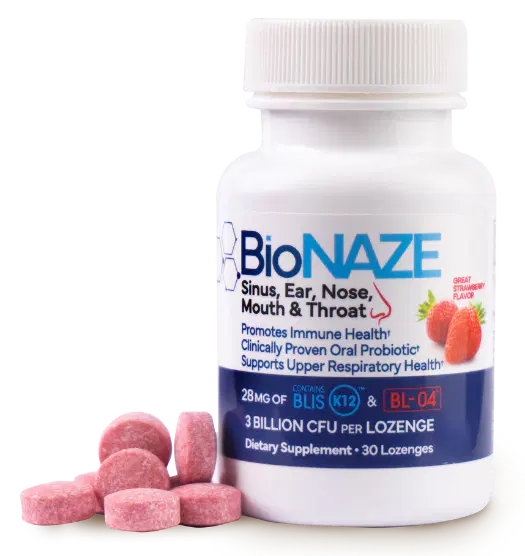
BioNaze is an oral probiotic formulated with two patented strains: BLIS K12™ (Streptococcus salivarius K12) and BL-04™ (Bifidobacterium Lactis BL-04).
BioNaze highlights BLIS K12™ for oral microbiome support and fresh breath, while BL-04™ has been studied for its potential role in immune function and microbial balance. Probiotic effects can vary by strain and health outcome, so these statements should not be interpreted as treatment for a specific medical condition.
Because a bad smell in the nose can have many different causes, BioNaze shouldn’t be presented as a treatment for sinus infections, nasal obstruction, dental conditions, phantosmia, or other underlying medical problems. If the odor is persistent, recurrent, or accompanied by concerning symptoms, identifying the underlying cause should take priority.
Frequently Asked Questions
Why do I have a bad smell in my nose?
A bad smell in the nose can have several possible causes, including sinus problems, mucus buildup, nasal congestion, oral health issues, dryness, and changes in smell perception such as phantosmia. The accompanying symptoms and duration can provide important clues.
Can a sinus infection cause a bad smell in the nose?
Sinusitis can be associated with changes in smell, mucus buildup, postnasal drip, and bad breath. Other symptoms can include nasal congestion, facial pressure, headache, and nasal drainage.
How can I get rid of a bad smell in my nose naturally?
Depending on the cause, basic measures such as appropriate saline nasal care, hydration, reducing dryness, and maintaining good oral hygiene may help. However, these measures may not resolve an underlying infection, obstruction, dental problem, or smell disorder.
Can a bad smell in the nose be caused by something serious?
A bad smell in the nose doesn’t necessarily indicate a serious condition, but persistent or unexplained symptoms should be evaluated. Seek medical advice when the odor continues or repeatedly returns, particularly if it occurs with severe pain, fever, unusual discharge, significant smell changes, or other concerning symptoms.
Why do I smell something bad when nobody else can?
You may be experiencing phantosmia, which is the perception of a smell that’s not actually present. Phantom smells can have several causes, including sinus and nasal conditions, migraines, dental problems, medications, and, less commonly, neurological conditions.
How long should a bad smell in the nose last?
The duration depends on the underlying cause. A temporary odor associated with congestion or another short-term problem may resolve as the condition improves. Persistent or recurring odors should be evaluated, especially when they occur with other symptoms.

Understanding and Managing a Bad Smell in Your Nose
A bad smell in the nose can have many possible causes, from sinus inflammation and mucus buildup to nasal obstruction, dryness, oral health problems, and changes in smell perception. The type of odor may provide clues, but the accompanying symptoms, duration, and overall pattern are more useful when determining what may be happening.
Mild symptoms may improve with appropriate self-care, while persistent, recurrent, or unexplained odors may require professional evaluation. If you experience significant facial pain, persistent fever, unusual nasal discharge, major changes in smell, or concerning neurological or vision symptoms, seek appropriate medical care.
Explore BioNaze to learn more about its probiotic formulation and its approach to oral and upper respiratory wellness.

This Content Has Been Reviewed For Factual Accuracy
This content has undergone thorough fact-checking by our team of internal experts. Learn more about the meticulous editorial standard for our website here.
Benefit From The Latest Advancements In Probiotic Science With Bionaze
Bionaze is a proprietary blend of probiotics proven to promote ear, nose, and throat health, improve digestion, and support your immune system. The active ingredients BLIS K12, and BL-04 are considered among the best probiotics according to science.
Get 25% Off Your First Order when you use BIO25 at checkout!
ADVERTISEMENT

About The Author
Hi, I’m Corinne Grace, a proud nursing graduate from Riverside College with a flair for writing. I specialize in health and wellness topics, using my educational background to weave informative and attention-grabbing articles that appeal to a wide variety of readers.