Bad Breath After Tooth Extraction: What’s Normal?

Published October 6, 2026
Bad breath after a tooth extraction can be unsettling, especially with an unpleasant taste or smell near the extraction site. Some changes are temporary and part of normal healing. Food debris, bacterial buildup, dry mouth, and changes around the healing site can all contribute. In some cases, bad breath may also signal dry socket or infection.
Bad breath alone doesn’t necessarily mean something is wrong. Other symptoms and how your recovery progresses provide more useful clues. Here are the common causes, ways to manage them, and signs that mean you should contact your dentist.
What Causes Bad Breath After Tooth Extraction?
An extraction changes the environment inside your mouth while the socket heals. Several factors can contribute to unpleasant breath, and some are part of normal recovery.
Food Debris Around the Extraction Site
A healing extraction socket can be difficult to clean, particularly when the area is tender. Food particles may collect around the site and contribute to bacterial activity and unpleasant odor.
Don’t pick at the socket with fingers, toothbrush, toothpick, or other objects because disturbing the area can interfere with healing. Follow your dentist’s instructions on when and how to rinse or clean around the site.
Bacteria and Oral Hygiene
Bacteria are naturally present in the mouth, but plaque and food buildup can contribute to bad breath.
An extraction doesn’t mean you should stop brushing. Keep the rest of your mouth clean while being careful around the extraction site. Follow your dentist’s instructions on when normal cleaning can resume.
Blood and the Healing Extraction Site
A blood clot normally develops in the socket after a tooth is removed, helping protect the underlying tissue during healing.
Changes around the site can temporarily affect taste or smell. More importantly, the clot must stay in place. Vigorous rinsing, forceful spitting, and smoking can disrupt it and interfere with healing.
Dry Mouth
Saliva helps keep the mouth moist and flushes away food particles and odor-causing substances. When the mouth is dry, bad breath can become more noticeable.
Drinking water regularly can help with temporary dryness. If dry mouth persists or worsens, ask your dentist or healthcare professional about possible causes.
Dry Socket
Dry socket, also called alveolar osteitis, can occur after a tooth extraction. It arises when the blood clot that forms in the socket is lost or displaced before the area has fully healed. The exposed socket can cause significant pain and may delay healing.
Bad breath and a foul taste can occur with dry socket, but significant or worsening pain is more typical. Dry socket usually develops a few days after extraction rather than immediately after the procedure.
Infection
An infection around the extraction site can also cause a foul taste or unpleasant breath. Other symptoms are more informative than smell alone.
Watch for increasing pain, swelling, pus or other discharge, fever, or feeling unwell. Bad breath alone doesn’t confirm infection. These symptoms and your recovery progress help your dentist decide if further care is needed.

How to Get Rid of Bad Breath After Tooth Extraction
The right approach depends on the cause. Freshening products may mask an odor without addressing problems such as dry socket or infection.
Keep Your Mouth Clean Without Disturbing the Socket
Keep brushing your teeth as directed by your dentist. Focus on the teeth and gums away from the extraction site. Avoid brushing directly over the socket.
Follow your dentist’s instructions for cleaning around the site rather than trying to remove debris yourself.
Rinse as Directed
Avoid vigorous rinsing or forceful spitting right after extraction unless your dental professional instructs you to. Disturbing the blood clot too early can interfere with healing.
Once rinsing is appropriate, your dentist may recommend warm salt water or another solution. Timing and technique vary by procedure, so follow your dentist’s instructions.
Stay Hydrated
Regular fluid intake can help prevent dry mouth, which may cause unpleasant breath. Water is usually the simplest choice unless you have been advised to restrict fluids.
Hydration helps with dryness but doesn’t address underlying dental complications.
Avoid Smoking and Other Behaviors That Can Disrupt Healing
Avoid smoking and tobacco while the extraction site heals. Smoking can impede recuperation and increase the chance of complications, including dry socket.
Follow your dentist’s advice on activities that might disturb the healing site, including guidance about suction or pressure.
Treat the Underlying Cause
Treatment depends on the cause.
- Food debris: Follow your dentist’s instructions for safe cleaning and rinsing.
- Bacterial buildup: Maintain appropriate oral hygiene.
- Dry mouth: Stay hydrated and address possible contributing factors.
- Dry socket: Contact your dentist for assessment and appropriate treatment.
- Infection: Seek dental evaluation so the underlying problem can be assessed and treated appropriately.
Dry socket may need professional care to clean the area and manage pain during healing. Do not probe or try to clean the socket yourself.
How Do You Know If Bad Breath After Tooth Extraction Is a Problem?
Smell alone doesn’t indicate whether your recovery is normal. Watch if pain and swelling improve or worsen.
Signs Your Recovery May Be Progressing Normally
Some soreness, swelling, and changes in taste can occur after an extraction and should generally improve as recovery progresses.
A temporary change in breath is less concerning if you feel better and have no significant increase in pain, swelling, or other symptoms.
Signs You Should Contact Your Dentist
Contact your dentist if you develop:
- Persistent or worsening foul breath or taste, especially with other symptoms
- Increasing or severe pain
- Increasing swelling
- Pus or unusual discharge
- Fever or feeling unwell
- Symptoms that worsen after initially improving
Symptoms are more informative than odor alone. Worsening pain days after extraction may indicate dry socket. Increasing pain and swelling may signal infection.
When to Seek Urgent Care
Significant facial or neck swelling, difficulty breathing, or swallowing requires prompt medical attention. These symptoms may mean a serious complication and shouldn’t be managed by trying to freshen your breath at home.
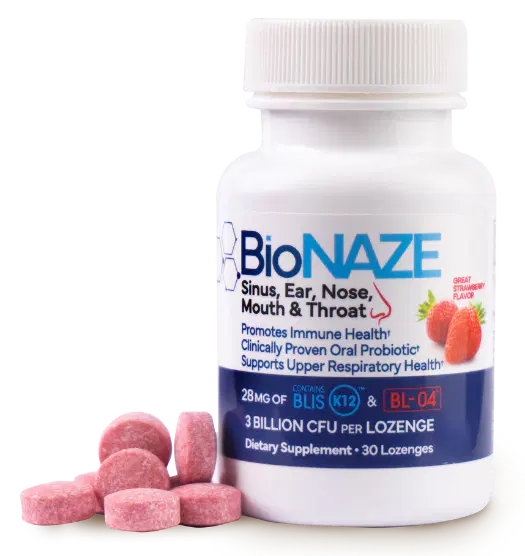
Why Choose BioNaze?
BioNaze contains two probiotic strains, BLIS K12™ (Streptococcus salivarius K12) and BL-04™ (Bifidobacterium lactis BL-04). These strains have been studied in connection with oral and upper respiratory microbiome health, and BioNaze is formulated for daily use.
BioNaze can complement an oral-health routine but shouldn’t treat dry socket, extraction-site infection, or other dental complications. If bad breath occurs with worsening pain, swelling, fever, or discharge, dental evaluation should come first.
Frequently Asked Questions
Why does my breath smell bad after tooth extraction?
Bad breath can result from food debris, bacterial buildup, dry mouth, or changes around the healing socket. It can also occur with dry socket or an infection, particularly when other symptoms develop.
How long does bad breath last after tooth extraction?
There’s no single timeframe for everyone. Temporary unpleasant taste or smell can occur while the socket heals, but symptoms should improve. Persistent or worsening odor needs professional assessment.
Is bad breath after wisdom tooth extraction normal?
It can happen during recovery, especially when the area is hard to clean. However, bad breath with worsening pain, swelling, fever, or feeling unwell shouldn’t be dismissed as normal healing. Contact your dentist if these symptoms develop.
Does dry socket cause bad breath?
Yes. Dry socket can bring about bad breath and a foul taste, usually along with significant pain. It often develops a few days after an extraction and should be assessed by a dental professional.
Does bad breath mean my extraction is infected?
Not necessarily. Bad breath alone doesn’t confirm infection. Increasing pain or swelling, pus, fever, or feeling unwell are more concerning signs that require dental assessment.
Can food get stuck in a tooth extraction site?
Yes, food particles can collect around a healing socket. Don’t pick at the area or use objects to remove debris. Follow your dentist’s instructions for safe rinsing and cleaning.
Can I brush my teeth after tooth extraction if I have bad breath?
Yes. Oral hygiene remains important after an extraction. Brush the other teeth carefully and take care around the extraction site. Follow your dentist’s instructions about cleaning directly around the socket.
When should I call my dentist about bad breath after tooth extraction?
Call your dentist if the smell persists or worsens. This is especially important if you have severe or increasing pain, swelling, discharge, fever, or feel unwell. These symptoms may indicate dry socket or infection at the extraction site. Both need proper assessment rather than masking the odor.

The Bottom Line: When Bad Breath After Tooth Extraction Needs Attention
Bad breath after tooth extraction can have several causes. Food debris, bacterial buildup, changes around the healing site, and dry mouth may contribute to temporary odor. Dry socket and infection are more concerning possibilities, particularly when bad breath occurs alongside worsening pain, swelling, fever, or discharge.
Protect the extraction site, maintain oral hygiene, stay hydrated, avoid smoking, and follow your dental professional’s aftercare instructions. If symptoms are getting worse rather than better, don’t simply mask the smell. Have the extraction site evaluated by your dentist.
For more information about oral health, breath freshness, and oral microbiome support, explore the educational resources available at BioNaze.

This Content Has Been Reviewed For Factual Accuracy
This content has undergone thorough fact-checking by our team of internal experts. Learn more about the meticulous editorial standard for our website here.
Benefit From The Latest Advancements In Probiotic Science With Bionaze
Bionaze is a proprietary blend of probiotics proven to promote ear, nose, and throat health, improve digestion, and support your immune system. The active ingredients BLIS K12, and BL-04 are considered among the best probiotics according to science.
Get 25% Off Your First Order when you use BIO25 at checkout!
ADVERTISEMENT

About The Author
Hi, I’m Corinne Grace, a proud nursing graduate from Riverside College with a flair for writing. I specialize in health and wellness topics, using my educational background to weave informative and attention-grabbing articles that appeal to a wide variety of readers.