How to Eliminate Bad Breath From the Stomach Naturally

Published November 10, 2026
Persistent bad breath can be bothersome, especially when brushing, flossing, and using mouthwash do little to improve it. If the odor keeps returning, you may wonder if it comes from your stomach rather than your mouth. To eliminate bad breath from stomach naturally, first find the cause.
Digestive problems can sometimes cause bad breath, but most cases start in the mouth. Ailments such as gastroesophageal reflux disease (GERD) and Helicobacter pylori (H. pylori) infection may have a role in some people, but they are less common explanations than oral health problems.
The right approach depends on the cause. Staying hydrated, adjusting eating habits, managing reflux symptoms, and practicing good oral hygiene may help. If bad breath persists, see a dentist or doctor. Another breath refresher won’t solve the problem.
Can Bad Breath Really Come From the Stomach?
Yes, certain digestive conditions can contribute to unpleasant breath, but the stomach is an uncommon source. Most cases develop because of bacteria and debris in the mouth.
Why Most Bad Breath Starts in the Mouth
Oral bacteria feed on food particles, dead cells, and other organic material. Some release volatile sulfur compounds (VSCs), which produce unpleasant odors.
Common oral causes include:
- Gum disease: Bacteria accumulate in pockets around inflamed gums.
- Tooth decay: Cavities and damaged fillings can trap food debris.
- Dry mouth: Reduced saliva allows bacteria and debris to accumulate.
- Tongue coating: Bacteria and organic material collect on the tongue, particularly toward the back.
- Tonsil stones: Deposits of bacteria and debris in the tonsils can produce unpleasant odors.
A systematic review of halitosis research estimates that approximately 80% to 90% of cases originate from intraoral causes. This is an approximate figure, not a universal rate.
Oral conditions are the most common cause of bad breath. If it continues despite periodic brushing and flossing, a dental exam is usually a sensible first step.
How Digestive Problems Can Affect Breath
The esophagus connects the mouth to the stomach. At the bottom of the esophagus sits a ring of muscle known as the lower esophageal sphincter. It keeps stomach contents from flowing backward.
When reflux occurs, stomach contents can move into the esophagus and sometimes reach the mouth. This may leave a sour or bitter taste that affects breath freshness. A bad taste from regurgitation is not always the same as chronic halitosis.
Other conditions involving food retention or regurgitation may also contribute to unpleasant breath. Still, the link between GERD and chronic halitosis is unclear. Persistent odor should not be blamed automatically on a digestive problem.
What Causes Bad Breath From the Stomach?
Several digestive and esophageal conditions may contribute to unpleasant breath. Other symptoms can provide clues, but bad breath alone cannot identify the underlying condition.
Gastroesophageal Reflux Disease (GERD)
GERD occurs when stomach contents repeatedly flow backward into the esophagus. Common symptoms include:
- Heartburn or a burning sensation in the chest.
- Regurgitation of food or sour-tasting stomach contents.
- A sour or bitter taste in the mouth.
- Frequent burping.
- Throat irritation or a sensation of something stuck in the throat.
When reflux reaches the mouth, it can leave an unpleasant taste. However, GERD is not an established cause of every case of persistent halitosis. Oral conditions such as gum disease, tongue coating, tooth decay, and dry mouth are more common causes.
The American College of Gastroenterology’s GERD guideline supports lifestyle measures such as avoiding meals close to bedtime and elevating the head of the bed for people with nighttime symptoms. Consult a doctor if you suffer from recurring heartburn or recurring regurgitation.
Helicobacter pylori (H. pylori) Infection
H. pylori is a bacterium that infects the lining of the stomach and is associated with gastritis and peptic ulcers. Many people with the infection have no symptoms.
A 2026 systematic review and meta-analysis involving 5,872 participants found a higher prevalence of H. pylori among people with halitosis. However, this association does not prove that the infection directly causes bad breath. Other factors, including gum disease, tongue coating, oral hygiene, smoking, and reflux, may influence the findings.
Some infected people experience upper abdominal discomfort, bloating, nausea, or stomach pain. A healthcare professional may recommend a stool antigen test or urea breath test to verify infection.
Treatment requires prescription medication, typically a combination of antibiotics and acid-suppressing drugs. The regimen depends on factors such as previous antibiotic use and resistance patterns.
The American College of Gastroenterology’s 2024 guideline recommends a test of cure at least four weeks after completing antibiotic treatment. PPIs should generally be withheld for two weeks before testing, and antibiotics and bismuth for at least four weeks. Consult your healthcare professional before adjusting any medication; do not stop prescribed treatment independently.
Other Less Common Digestive Conditions
Some esophageal and throat conditions can cause bad breath. Food can get trapped in these areas. It may later come back up into the mouth.
For example, achalasia affects the movement of food through the esophagus. Zenker’s diverticulum creates a pouch near the throat where food and other material can collect. Both may be associated with regurgitation, swallowing difficulties, and halitosis.
These are uncommon causes of bad breath and are not stomach disorders. Difficulty swallowing, recurring regurgitation, or unexplained weight loss warrants medical evaluation.
How to Manage Bad Breath From the Stomach Naturally
If reflux or oral health problems contribute to unpleasant breath, certain habits may help manage symptoms. However, these measures cannot replace treatment for an underlying medical condition.
Drink Enough Water
Saliva helps clear food particles and odor-producing substances from the mouth. When saliva production decreases, bacteria and debris can accumulate more easily.
Drink water regularly throughout the day, particularly if your mouth feels dry. Medications, alcohol, tobacco, and mouth breathing can also cause dry mouth. If the problem persists, discuss it with your dentist or healthcare professional.
The American Dental Association’s guidance on dry mouth explains how reduced saliva can increase the risk of tooth decay and oral infections.

Eat Small-Sized Meals and Avoid Eating Before Bed
Large meals may aggravate reflux symptoms, especially when followed by lying down. Consider these habits:
- Eat moderate portions instead of very large meals.
- Avoid lying down immediately after eating.
- Allow at least three hours between your last meal and bedtime if you experience nighttime reflux.
- Eat slowly rather than rushing through meals.
The NIDDK’s GERD guidance recommends allowing at least three hours between eating and lying down when nighttime or positional reflux is a concern.
Identify Your Acid Reflux Triggers
Certain foods and beverages may aggravate reflux in some people. Potential triggers include:
- Spicy foods.
- Citrus fruits and tomato-based products
- Chocolate
- Coffee and other caffeinated drinks
- High-fat or fried foods
- Alcohol
- Mint
These foods do not affect everyone with GERD. Monitor what you eat and when symptoms arise. Then cut back only on foods that consistently trigger them, instead of following an overly restrictive diet.
Elevate Your Head While Sleeping
If you experience nighttime reflux, elevating your upper body may help reduce symptoms. A wedge pillow or an appropriately elevated bed head can raise your chest and upper torso.
Stacking regular pillows may not provide the same support because they can bend your body at the waist. The American College of Gastroenterology GERD guideline identifies head-of-bed elevation as a potential measure for managing nighttime reflux.
Maintain Good Oral Hygiene
Good oral hygiene remains essential, even when you suspect a digestive cause. Follow these habits:
- Brush twice daily for two minutes with fluoride toothpaste.
- Floss or use interdental cleaners daily.
- Gently clean your tongue to remove accumulated coating.
- Clean dentures and dental appliances as directed.
- Schedule regular dental examinations and professional cleanings.
These steps help remove odor-producing debris and address common oral causes of halitosis. If bad breath persists, your dentist can check for gum disease, cavities, and other problems. The NHS guide to bad breath also recommends regular tongue cleaning and interdental care.
Use Sugar-Free Gum for Temporary Relief
Chewing sugar-free gum after eating a meal can stimulate saliva production and help clear food debris. It may provide temporary relief from dry mouth, but it cannot treat acid reflux, eliminate H. pylori, or resolve an underlying digestive condition.
Consider Oral Probiotics
Some oral bacteria produce volatile sulfur compounds (VSCs) that contribute to bad breath. Research suggests that certain strains of probiotics may help improve breath freshness by supporting a healthier oral microbial balance.
One studied strain is Streptococcus salivarius K12 (BLIS K12). A 2025 systematic review of six randomized trials involving 360 participants reported improvements in breath odor and VSC levels in some studies. However, these findings relate to oral halitosis, not digestive bad breath. Oral probiotics may complement regular oral hygiene but are not established treatments for GERD, gastritis, or H. pylori infection.
Probiotics are generally well tolerated by healthy people, but severely ill or immunocompromised individuals should consult a healthcare professional before using supplements. Serious infections are rare but reported in higher-risk individuals, according to the National Center for Complementary and Integrative Health.
Choose Breath Fresheners Carefully
Breath mints and flavored sprays provide temporary freshness without addressing persistent odor. Some therapeutic mouthwashes contain ingredients that reduce odor-producing bacteria, or VSCs. However, they cannot treat reflux or gastrointestinal infections.
Alcohol-containing mouthwashes may worsen dry mouth in some people. If bad breath keeps returning, focus on identifying its cause rather than relying solely on freshening products.
When Should You See a Dentist or Doctor?
Bad breath that lingers despite regular home care needs closer examination. A professional can help find the cause.
When to Visit a Dentist
Schedule a dental appointment if you experience:
- Persistent bad breath despite frequent brushing and flossing.
- Bleeding, swollen, or tender gums.
- Toothaches or visible cavities.
- A lingering unpleasant taste.
- Food is frequently trapped between your teeth.
Your dentist can examine your teeth, gums, tongue, and other oral tissues. Treatment may include professional cleaning, periodontal care, cavity treatment, or dry mouth management.

When to Consult a Doctor
If your dentist does not identify an oral cause, consult a healthcare professional when bad breath occurs alongside:
- Frequent heartburn or acid regurgitation.
- Persistent sour or bitter taste.
- Upper abdominal discomfort.
- Frequent nausea or unexplained bloating.
- Difficulty swallowing.
- Unintentional weight loss.
Your doctor can determine whether testing for GERD, H. pylori, or another condition is appropriate.
Vomiting blood or passing black, tarry stools requires urgent medical assessment. Severe or worsening chest pain needs emergency care. Seek help immediately if you also have shortness of breath, sweating episodes, or pain spreading to your arm or jaw.
Frequently Asked Questions
How can you tell if bad breath is coming from your stomach?
Bad breath alone cannot identify its source. Heartburn, regurgitation, and a sour taste may indicate reflux. Bleeding gums, tooth decay, a coated tongue, and dry mouth may indicate an oral cause. A dental examination is generally a sensible first step.
What does stomach-related bad breath smell like?
There is no specific smell that reliably identifies a digestive cause. Reflux may leave a sour or acidic taste when stomach contents reach the mouth, but odor descriptions cannot establish a diagnosis.
Can acid reflux cause bad breath without heartburn?
Yes. Some people experience reflux-related symptoms without typical heartburn. Laryngopharyngeal reflux (LPR) involves the backflow of stomach contents into the throat or voice box and is sometimes called silent reflux. However, throat clearing, hoarseness, and irritation can have other causes. Bad breath alone does not establish GERD or LPR.
Does lemon water help get rid of stomach-related bad breath?
Lemon water is not a proven treatment for digestive-related bad breath. Water supports hydration and saliva production. Acidic lemon juice may worsen reflux symptoms in some people. Plain water is a better choice if citrus triggers your symptoms.
Can probiotics help with bad breath caused by digestive problems?
Some oral probiotic strains, such as Streptococcus salivarius K12, may help reduce oral halitosis. However, oral probiotics are not established treatments for GERD, gastritis, or H. pylori infection.
How long does it take to get rid of bad breath caused by acid reflux?
There is no fixed timeline. Improvement depends on how often reflux occurs, its cause, and how well symptoms respond to lifestyle changes or medical treatment. Consult your doctor if symptoms persist.
Can H. pylori cause persistent bad breath?
Research suggests an association between H. pylori infection and halitosis, but not everyone with the infection has bad breath. A urea breath test or stool antigen test can help identify the infection. Confirmed cases require prescription treatment and follow-up testing.
Why Choose BioNaze?
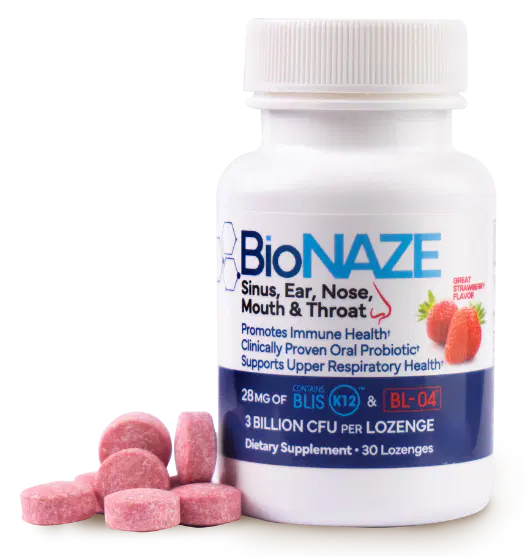
Looking for ways to manage persistent bad breath? BioNaze is an oral probiotic with two researched strains. They are BLIS K12™ (Streptococcus salivarius K12) and BL-04™ (Bifidobacterium Lactis BL-04).
BLIS K12™ (Streptococcus salivarius K12) is well studied in oral health research. Researchers have examined whether it can help support fresher breath. It may complement daily oral hygiene by supporting a beneficial balance of bacteria in the mouth.
BioNaze also contains BL-04™ (Bifidobacterium Lactis BL-04), a strain investigated for its potential role in immune and respiratory health. While these areas of research add to the formulation’s probiotic profile, BL-04™ has not been established as a treatment for halitosis.
Oral probiotics and digestive treatments address different causes of bad breath. BioNaze can complement regular brushing, flossing, and tongue cleaning. It should not be considered a treatment for GERD, H. pylori infection, or other underlying causes of digestive-related bad breath. Persistent symptoms warrant evaluation by a dentist or healthcare professional.
Find the Cause of Bad Breath for Lasting Relief
Most bad breath starts in the mouth, though digestive and esophageal conditions can also play a role. GERD can cause regurgitation and an unpleasant taste. Research suggests an association between H. pylori infection and halitosis.
Knowing how to eliminate bad breath from stomach-related conditions starts with addressing the cause. Oral probiotics may support fresher breath in some cases but do not treat digestive conditions.
If bad breath persists, consult a dentist or healthcare professional for evaluation. Explore BioNaze for more information about oral probiotics and oral health.

This Content Has Been Reviewed For Factual Accuracy
This content has undergone thorough fact-checking by our team of internal experts. Learn more about the meticulous editorial standard for our website here.
Benefit From The Latest Advancements In Probiotic Science With Bionaze
Bionaze is a proprietary blend of probiotics proven to promote ear, nose, and throat health, improve digestion, and support your immune system. The active ingredients BLIS K12, and BL-04 are considered among the best probiotics according to science.
Get 25% Off Your First Order when you use BIO25 at checkout!
ADVERTISEMENT


About The Author
Hi, I’m Corinne Grace, a proud nursing graduate from Riverside College with a flair for writing. I specialize in health and wellness topics, using my educational background to weave informative and attention-grabbing articles that appeal to a wide variety of readers.