Pregnancy Rhinitis: Causes, Symptoms, and Relief
Published November 17, 2026
Nasal congestion during pregnancy can be frustrating. It’s worse when it occurs without the usual cold or allergy symptoms. For some women, the cause is pregnancy rhinitis, a condition linked to hormonal and circulatory changes.
Persistent congestion can affect breathing, sleep, and daily activities. Knowing the symptoms, causes, and safe management options can help you find relief and recognize when to seek medical advice.
What Is Pregnancy Rhinitis?
Pregnancy rhinitis is nasal congestion and related symptoms that start during pregnancy. It has no clear allergic or infectious cause. Hormonal and circulatory changes may cause the nasal lining to swell. This can narrow the nasal passages and make breathing more difficult.
Traditionally, pregnancy-induced rhinitis means nasal congestion lasting the final six or more weeks of pregnancy. Symptoms typically resolve within about two weeks after delivery. However, nasal symptoms can begin earlier. Not all congestion during pregnancy meets this clinical definition.
Allergies, respiratory infections, and other nasal conditions can cause similar symptoms. A healthcare professional may need to determine the underlying cause. The International Consensus Statement on Allergy and Rhinology discusses the traditional definition and other nasal symptoms during pregnancy.
What Causes Pregnancy Rhinitis?
Doctors don’t know the exact cause of pregnancy rhinitis. Hormonal and circulatory changes likely play a role.
Estrogen may influence blood vessel activity and swelling in nasal tissues. Progesterone may affect smooth muscle tone. Pregnancy increases circulating blood volume, which may affect blood vessels in the nasal lining and contribute to congestion.
Researchers have proposed other hormonal and placental factors. However, no single primary cause has been established. Pregnancy rhinitis likely involves several overlapping physiological changes, as discussed in clinical research reviews.
What Are the Common Symptoms of Pregnancy Rhinitis?
Pregnancy rhinitis primarily affects the nasal passages. Symptoms vary in severity and may continue for several weeks.
Common symptoms include:
- Persistent nasal congestion: A blocked or stuffy nose that makes breathing through the nostrils difficult.
- Runny nose: Increased nasal discharge or a frequent need to blow the nose.
- Sneezing: Repeated sneezing without an obvious cold or allergen exposure.
- Reduced sense of smell: Nasal swelling can restrict airflow and make it harder to detect odors.
- Mouth breathing: A blocked nose may make mouth breathing more comfortable, especially at night.
- Snoring and disrupted sleep: Ongoing congestion may cause snoring and interfere with sleep.
Nasal itching may also occur. Itchy eyes and symptoms triggered by specific allergens suggest allergic rhinitis. Nasal itching alone doesn’t rule out pregnancy rhinitis.
Fever or significant facial pain may signal an infection or another illness that needs medical attention.
When Does Pregnancy Rhinitis Start?
Pregnancy-related nasal symptoms can develop at different stages. Some women notice congestion during the first trimester, while others experience it later in pregnancy.
Early congestion doesn’t always count as pregnancy-induced rhinitis under the clinical definition. This definition applies to congestion during the final six or more weeks of pregnancy and requires no clear allergic or infectious cause.
See a healthcare professional if symptoms are severe or accompanied by other signs of illness. This can help rule out allergies, infections, and other nasal conditions.
How Is Pregnancy Rhinitis Different From Allergies or a Sinus Infection?
Pregnancy rhinitis, allergic rhinitis, and sinus infections can cause similar symptoms, but a few key features can help tell them apart.
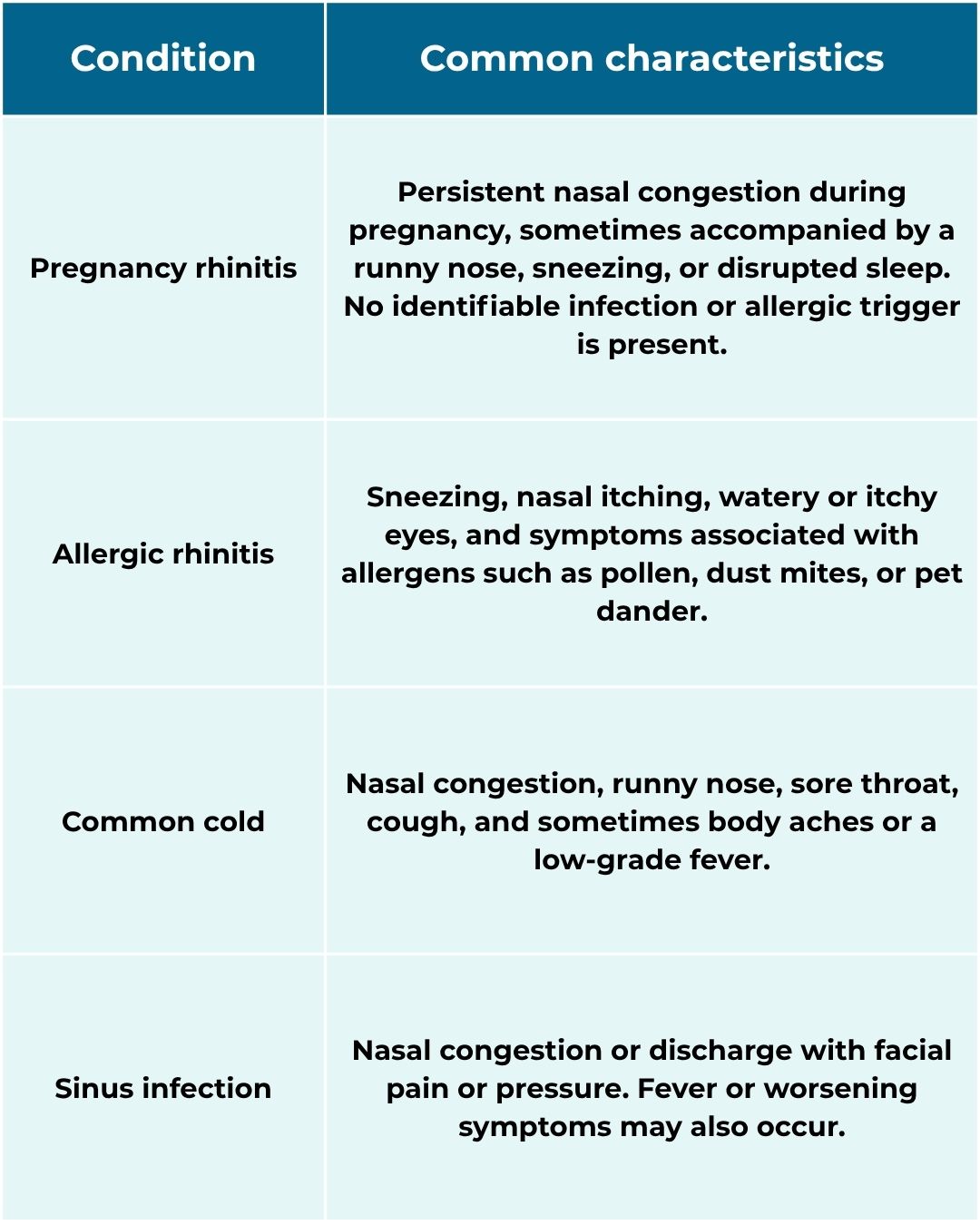
These symptoms don’t establish a diagnosis. Allergies and respiratory infections can occur during pregnancy. Mucus color alone cannot confirm a bacterial infection.
Talk to a healthcare professional if you’re not sure what’s causing your symptoms. This is especially important if you develop a fever, significant facial pain, or worsening congestion.

How Can You Relieve Pregnancy Rhinitis Safely?
Conservative measures may ease pregnancy-related nasal discomfort without unnecessary medication. Consider these options:
- Use saline nasal spray or irrigation: Saline moisturizes nasal passages and helps clear mucus. For irrigation, use distilled, sterile, or boiled and cooled water. Clean and dry the device after each use. See the FDA’s guidance on safe sinus rinsing.
- Elevate your head while sleeping: An additional pillow or raised head position may improve nighttime comfort.
- Try nasal strips: External nasal strips may open up the nasal passages and improve airflow during sleep.
- Use a clean humidifier: A humidifier may provide temporary comfort when the air is dry. Follow the manufacturer’s cleaning instructions to prevent mold and microbial growth.
- Avoid known irritants: Tobacco smoke, strong fragrances, dust, and other airborne irritants may worsen symptoms.
- Maintain normal hydration: Drinking enough fluids supports general health. Extra water is not an established treatment for pregnancy congestion.
- Stay active when appropriate: Gentle physical activity supports general well-being. Check with your healthcare provider before exercising. Physical activity is not a proven treatment for nasal congestion.
What About Medication?
Talk to your OB-GYN or another qualified healthcare professional before taking any medication for nasal congestion during pregnancy.
Antihistamines and intranasal corticosteroids may be considered for allergic rhinitis. However, their effectiveness for pregnancy-induced rhinitis is less established. Recommendations on antihistamine use vary. Intranasal corticosteroids have not shown clear benefits for pregnancy-induced rhinitis. Medication choices should depend on the suspected cause, pregnancy stage, and individual circumstances.
Don’t use oral or topical decongestants during pregnancy without medical advice. These medications are generally avoided unless a healthcare professional recommends them after weighing risks and benefits. Lengthy use of topical decongestants can cause rebound congestion.
The American Academy of Family Physicians’ review of over-the-counter medications during pregnancy provides additional guidance. Your healthcare provider can suggest options based on your medical history and stage of pregnancy.
When Does Pregnancy Rhinitis Go Away?
Pregnancy rhinitis usually improves after delivery. Hormone levels and blood circulation return to pre-pregnancy states. Under the traditional clinical definition, symptoms resolve within about two weeks. However, recovery times can vary.
If congestion lasts longer, worsens, or comes with other concerning symptoms, see a healthcare provider.
When Should You See a Doctor About Pregnancy Congestion?
Although mild congestion may improve with conservative measures, certain symptoms require medical assessment. Contact your healthcare provider if you have:
- Persistent or worsening congestion that interferes with daily activities.
- Fever, significant facial pain, or pressure around the cheeks and forehead.
- Difficulty breathing, wheezing, or worsening asthma symptoms.
- Nasal symptoms that continue beyond approximately two weeks after delivery.
- Uncertainty about whether an over-the-counter medication or supplement is appropriate during pregnancy.
Talk to your healthcare provider if you have persistent loud snoring, breathing pauses during sleep, or significant daytime sleepiness. These symptoms may indicate sleep-disordered breathing. Snoring alone doesn’t confirm obstructive sleep apnea. Seek timely medical attention if you experience severe breathing difficulty.
Why Choose BioNaze?
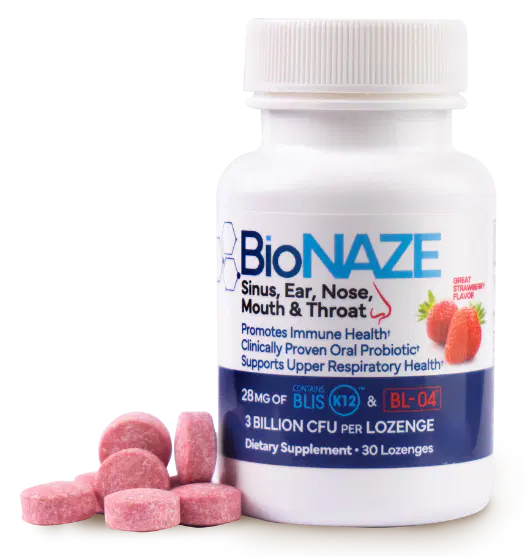
BioNaze is an oral probiotic lozenge formulated with BLIS K12™ (Streptococcus salivarius K12) and BL-04™ (Bifidobacterium Lactis BL-04). Each lozenge provides 3 billion CFU and has a natural strawberry flavor. The formulation is designed to support oral and upper respiratory wellness.
BioNaze is not a treatment for pregnancy rhinitis or nasal congestion. Studies on individual probiotic strains don’t prove that the finished product is safe or effective during pregnancy.
If you’re pregnant or breastfeeding, consult your OB-GYN before taking BioNaze or any other probiotic supplement. Visit the BioNaze product page for more information.
Frequently Asked Questions
Can pregnancy rhinitis start in the first trimester?
Nasal congestion can begin during the first trimester as hormonal and circulatory changes occur. However, early symptoms may not meet the traditional definition of pregnancy-induced rhinitis. This definition applies to congestion during the final six or more weeks of pregnancy. Allergies and infections should also be considered.
Does pregnancy rhinitis affect the baby?
Uncomplicated pregnancy rhinitis hasn’t been established as a direct cause of damage to the developing baby. However, persistent congestion can affect maternal sleep and comfort. Talk to a healthcare provider about severe sleep disruption or possible sleep-disordered breathing.
Can pregnancy rhinitis cause snoring or disrupt sleep?
Yes. Nasal swelling can make nasal breathing difficult. This may contribute to mouth breathing, snoring, and disrupted sleep. Talk to a healthcare professional if you have persistent loud snoring, breathing pauses, or significant daytime sleepiness.
Is pregnancy rhinitis worse at night?
It may feel worse at night because lying down can make nasal stuffiness more noticeable. Nasal strips, saline spray, and elevating your head while sleeping may improve comfort.
Can you have pregnancy rhinitis without a runny nose?
Yes. Nasal congestion can occur without discharge. Some women mainly experience a blocked or stuffy nose caused by swelling of the nasal lining.
Can pregnancy rhinitis turn into a sinus infection?
Pregnancy rhinitis doesn’t automatically lead to a sinus infection, though both can occur simultaneously. Fever, significant facial pain or pressure, and worsening symptoms require medical assessment.

Understanding Pregnancy Rhinitis and Finding Relief
Pregnancy rhinitis can affect breathing, sleep, and daily comfort. Symptoms usually improve after childbirth. Distinguishing pregnancy congestion from allergies and respiratory infections helps you choose the right relief. Saline sprays and safe nasal irrigation can help manage discomfort. Consult your OB-GYN before using medications or supplements during pregnancy.
Visit BioNaze to learn about its probiotic formulation for oral and upper respiratory wellness. If you’re pregnant or breastfeeding, talk to your healthcare provider before taking a probiotic.

This Content Has Been Reviewed For Factual Accuracy
This content has undergone thorough fact-checking by our team of internal experts. Learn more about the meticulous editorial standard for our website here.
Benefit From The Latest Advancements In Probiotic Science With Bionaze
Bionaze is a proprietary blend of probiotics proven to promote ear, nose, and throat health, improve digestion, and support your immune system. The active ingredients BLIS K12, and BL-04 are considered among the best probiotics according to science.
Get 25% Off Your First Order when you use BIO25 at checkout!
ADVERTISEMENT


About The Author
Hi, I’m Corinne Grace, a proud nursing graduate from Riverside College with a flair for writing. I specialize in health and wellness topics, using my educational background to weave informative and attention-grabbing articles that appeal to a wide variety of readers.